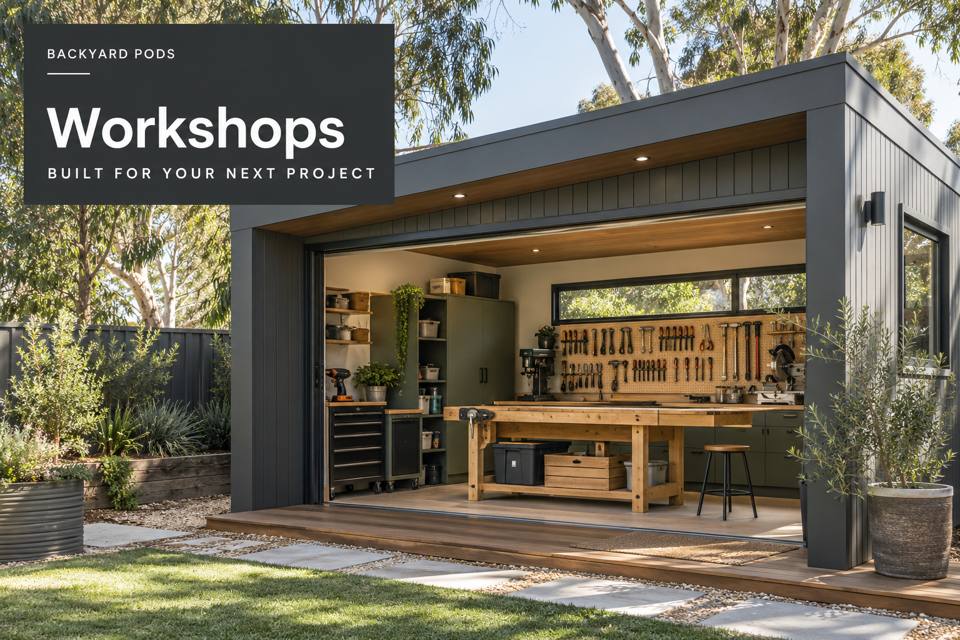
Plan a Bega workshop for garden plant label projects with organised blanks, readable lettering trials and clearly specified tools.
Garden plant labels combine small-scale craftsmanship with practical communication. For a workshop in Bega, the room can support preparing blanks, testing lettering and organising finished sets, provided the chosen fabrication method is accurately described. Start with the label's intended use and the materials involved. A clear sequence helps produce readable, consistent pieces without allowing small components to spread across every available surface.
◈ Define the label before the machinery
Bega's valley landscape provides a natural regional context for gardening interests. The actual workshop design should follow the household's projects and property conditions. Decide whether labels are made for a personal garden or another activity, then record the expected quantities and working hours. These details are relevant to advice about the proposed building use.
Select a representative label and test its readability at the distance from which it will be viewed. A design that looks elegant on a desk may be difficult to recognise outdoors. Compare lettering size, contrast and the amount of information. A restrained symbol can assist identification, but a clear plant name should carry the essential meaning.
Organise small components into a visible sequence
Keep unused blanks, work in progress and completed labels in separate trays. Label the trays with plain names so another household member can understand the arrangement. Measure their combined footprint, including the surface used for lettering tests. A small craft project can still need generous organisation space if several varieties are being produced together.
Materials and fabrication processes require appropriate guidance. Describe whether the work involves hand marking, cutting, coatings or other tools, and seek relevant advice for equipment, dust, ventilation and product handling. Follow manufacturer instructions. The workshop pod should be specified for the actual process rather than assumed suitable because the finished objects are small.
▦ Plan the label-making stations
| Station | Craft purpose | Detail to establish |
|---|---|---|
| Blank storage | Keeps materials organised | Sizes and expected quantities |
| Lettering trial | Checks readable design | Viewing distance and contrast |
| Working surface | Supports the chosen process | Tool-specific operating space |
| Completed set tray | Groups labels for placement | Plant names and project identity |
Match the fit-out to accurate work
Task lighting should reveal fine lettering without strong shadows from the operator's hands. Check the bench height using the actual working posture. Ask the carpenter about surface durability and supports, while electrical installation is coordinated with a qualified professional. Leave equipment and service access available after storage is fitted.
For an New South Wales workshop, obtain advice about the address, intended activity and construction conditions. Review ground preparation, drainage, support design and delivery access. If the labels are intended for outdoor use, ask the relevant material suppliers about durability and maintenance in the intended environment. Avoid presenting an attractive finish as proof that it will suit every exposure condition.
Include these project details:
- The information each label is intended to communicate.
- Material sizes and the actual fabrication method.
- A system for distinguishing blank, unfinished and completed pieces.
- Supplier guidance for products used during making or finishing.
✓ Develop the label workshop in five stages
- Test a representative label for readability in its intended setting.
- Define materials, quantities and the actual making process.
- Measure trays, tools and the occupied working surface.
- Coordinate professional equipment advice and fitted bench details.
- Request an itemised building and workshop fit-out proposal.
Give a small craft a well-organised home
Explore workshops with plant label making as a focused activity. A Bega workshop can become a capable place for useful, considered craftsmanship when readable design and orderly production are planned together. Measured trays, suitable materials and clearly coordinated services turn a simple garden idea into a repeatable, satisfying project.
