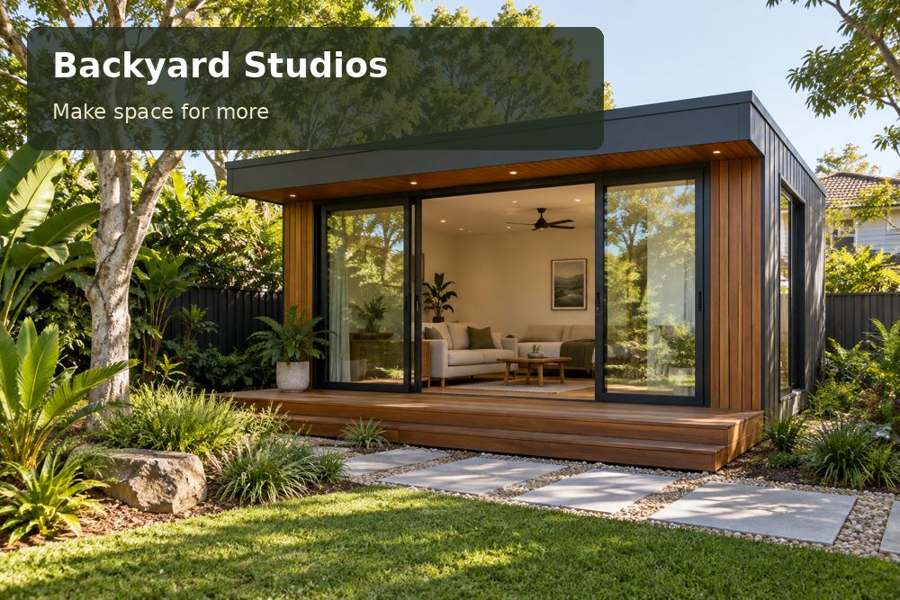
Create a Bunbury printmaking studio with clear preparation zones, protected paper storage and surfaces selected for the actual creative process.
Paper-based work in Bunbury benefits from a room where preparation, making and storage have distinct places. A Bunbury backyard studio can support printmaking and related creative practices through a disciplined layout and carefully selected finishes. The garden setting adds an inviting sense of separation from the house, while the interior keeps tools and unfinished work ready for the next session. Begin with the process, then develop a building that gives it a permanent and elegant home.
Find a local palette without prescribing the site
The City of Bunbury describes its setting through the Indian Ocean, Koombana Bay and Leschenault Inlet. Those three waters offer a distinctive local reference for colour, reflection and texture. They do not determine the conditions of every garden. Observe the actual proposed studio position, including shade, access and surrounding vegetation, before selecting glazing or exterior materials.
In the Western Australia studio range, compare useful wall space and storage capacity rather than floor area alone. Printmaking may require a protected paper cabinet, a preparation surface and an uninterrupted location for work in progress. Position the entrance so materials can be carried in without brushing against finished pieces. A simple, sheltered landing can make that routine more comfortable.
Define the printmaking process precisely
Describe the techniques and products used, including any equipment or substances that require specialist advice. A general studio proposal should not be assumed to provide every ventilation, cleaning or handling arrangement needed by a particular process. Provide manufacturer information where relevant and ask suitable professionals to identify the requirements. Clear description prevents important needs from being hidden behind a broad craft label.
Organise the room so clean paper does not travel repeatedly across preparation areas. Storage height, drawer dimensions and accessible bench edges matter. If a press or heavy item is included, its weight and operating requirements need assessment alongside the floor and fit-out design. Confirm those details before choosing a location merely because it fits visually.
Compare paper and work storage
| Storage format | Useful purpose | Dimension to establish |
|---|---|---|
| Flat drawer cabinet | Holds paper and finished prints | Largest sheet size and drawer access |
| Vertical board storage | Organises backing and display materials | Height and secure separation |
| Work-in-progress rack | Keeps current projects identifiable | Capacity and suitable support details |
A well-sized cabinet can make a compact studio highly effective. Measure the collection and allow room to retrieve material without bending it around the doorway. Consider how storage will be cleaned and how the owner will keep different stages of work clearly separated.
Choose light and surfaces for the work
Use representative paper, inks or other materials when reviewing finish and lighting samples. The task requires useful illumination at the bench, but the room may also need a place to inspect and photograph completed work. Plan adjustable task lighting alongside general fittings. Glazing should provide controllable daylight while leaving sufficient wall for storage and process equipment.
The exterior deserves equally disciplined detailing. Review cladding joints, door trims and the route of roof water. Ask for material care instructions and an explanation of the proposed specifications for the site’s assessed exposure. Foundation design and service routes should be coordinated early. If plumbing is required, include water and wastewater arrangements as a defined part of the project rather than an assumed future addition.
Your printmaking brief should include:
- Largest paper and display-board dimensions.
- Equipment weights and operating clearances.
- Product information for specialist process requirements.
- Cleaning, storage and documentation routines.
A five-step process-led proposal
- Write down each stage from material preparation to printing, holding, finishing and storing the completed work.
- Measure equipment and paper formats, then draw an active layout with cabinet drawers and doors open.
- Obtain qualified advice covering relevant approvals, site conditions, services and specialist process needs.
- Compare bench finishes, lighting and storage samples against your actual materials and cleaning methods.
- Request a scope separating the studio building, fit-out, preparation work and any specialist equipment installation.
A garden room that keeps the process organised
A Bunbury printmaking studio can give creative work continuity through clear zones, useful paper storage and considered light. Explore backyard studios and request a proposal based on the techniques and equipment you use. Precise planning makes the room more than an attractive retreat: it becomes an organised setting where materials and ideas are ready to develop.
