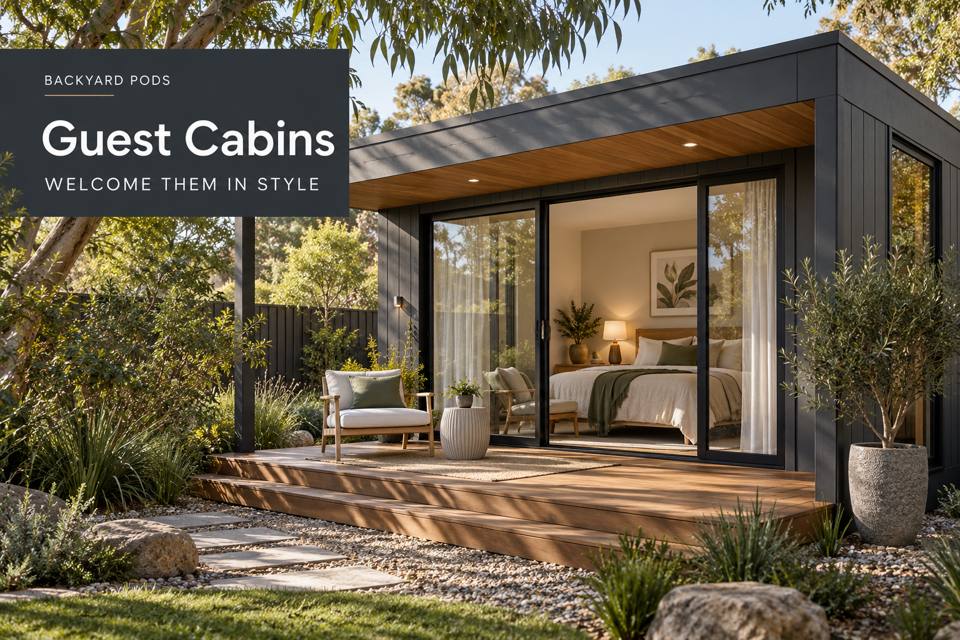
Bundaberg Guest Cabins with an Organised Early and Late Arrival Brief: explore practical layout choices, material and service coordination, and a clear project brief based on the intended use.
◈ Define the purpose before choosing the fitout
Guests exploring Bundaberg's regional attractions, including the Mon Repos conservation area, may keep different hours from the host household. A cabin can support those arrivals through clear directions, entrance lighting and an understandable interior. Avoid promising access to particular tours or wildlife encounters; the room's role is to provide the facilities and arrival arrangements actually included in the stay.
Directions identifying the cabin within the property
A guest should know which route and entrance to use. Prepare directions from the genuine arrival point and test them with someone unfamiliar with the layout. Distinguish any private household areas so visitors do not need to search through the garden for the right door.
Lighting along the relevant movement route
Review suitable external fittings and controls with the appropriate provider. The aim is to help guests identify the entrance and ordinary obstacles, with attention to neighbouring windows. Regional tourist activity does not determine the property's lighting needs; the actual route does.
Bags placed without blocking the sleeping area
Show the travel bag open on the plan beside the bed and door. A luggage stand or dedicated surface can make unpacking more convenient. Its location should remain usable when another guest is seated or moving through the room.
Simple instructions for equipment and departure
Unfamiliar controls can complicate a late arrival. Keep concise equipment instructions with the actual supplied devices, including the host's contact procedure where relevant. Confirm the room is prepared before each visit, then give visitors a clear description of the departure arrangements.
▦ Compare the details that matter
| Design decision | Information to request | Intended result |
|---|---|---|
| Directions identifying the cabin within the property | Property-specific arrival directions identifying the cabin entrance and intended visitor route | Guests locating their accommodation through a clear and tested arrival sequence |
| Lighting along the relevant movement route | A professional entrance-lighting proposal based on the cabin's measured approach and neighbours | The arrival route receiving purposeful lighting appropriate to its actual residential setting |
| Bags placed without blocking the sleeping area | An open-luggage footprint checked against bed access, doorway movement and guest seating | Arriving visitors unpacking through a layout tested with their belongings in use |
| Simple instructions for equipment and departure | An equipment and departure information sheet matched to the facilities genuinely supplied | Visitors understanding the cabin's ordinary operation and the agreed end-of-stay procedure |
When comparing guest cabins in Bundaberg, bring information about directions identifying the cabin within the property to the consultation. For an address in Queensland, confirm the relevant site and use requirements with appropriate professionals. Review simple instructions for equipment and departure within the same coordinated proposal.
Practical priorities for the quotation
- Request property-specific arrival directions identifying the cabin entrance and intended visitor route; clarify the responsible contributor.
- Document a professional entrance-lighting proposal based on the cabin's measured approach and neighbours; clarify the responsible contributor.
- Retain an open-luggage footprint checked against bed access, doorway movement and guest seating; clarify the responsible contributor.
- Include an equipment and departure information sheet matched to the facilities genuinely supplied; clarify the responsible contributor.
✓ Develop the proposal in five steps
- Review directions identifying the cabin within the property with the provider. Ask how the proposal supports guests locating their accommodation through a clear and tested arrival sequence.
- Review lighting along the relevant movement route with the provider. Ask how the proposal supports the arrival route receiving purposeful lighting appropriate to its actual residential setting.
- Review bags placed without blocking the sleeping area with the provider. Ask how the proposal supports arriving visitors unpacking through a layout tested with their belongings in use.
- Review simple instructions for equipment and departure with the provider. Ask how the proposal supports visitors understanding the cabin's ordinary operation and the agreed end-of-stay procedure.
- Confirm the coordinated scope, with an equipment and departure information sheet matched to the facilities genuinely supplied, before manufacture or installation is committed.
Summary: a room with a documented purpose
Bundaberg Guest Cabins with an Organised Early and Late Arrival Brief benefits from decisions tied to actual users and property conditions. Start with guests locating their accommodation through a clear and tested arrival sequence. Coordinate this with the arrival route receiving purposeful lighting appropriate to its actual residential setting. The supporting brief should also address arriving visitors unpacking through a layout tested with their belongings in use. At the final review, confirm the provisions for visitors understanding the cabin's ordinary operation and the agreed end-of-stay procedure. Use the drawings, product information and itemised scope as the agreed project reference.
