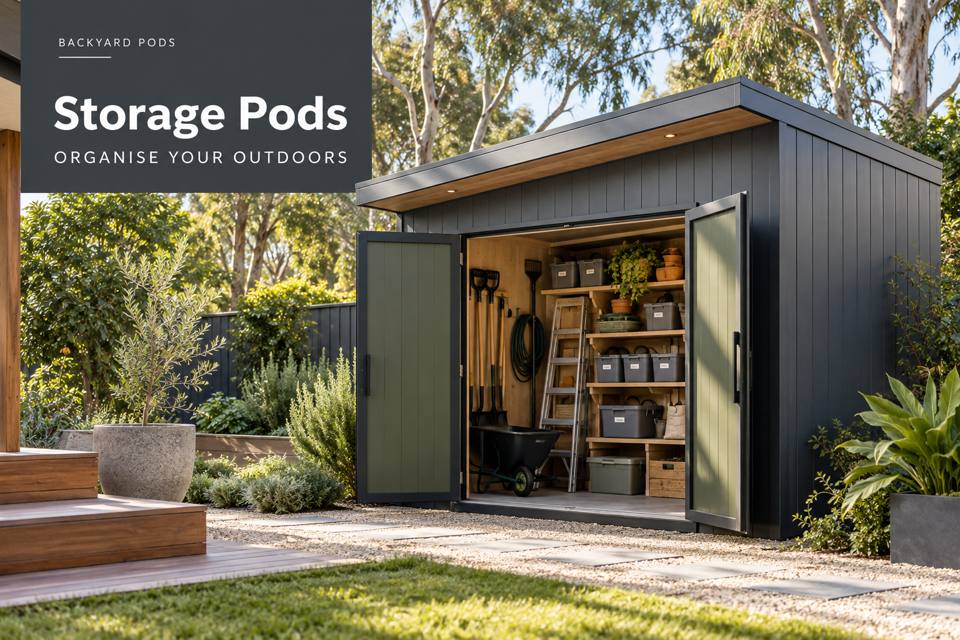
Bundaberg Storage Pods for Clearly Labelled Household Keepsakes: explore practical layout choices, material and service coordination, and a clear project brief based on the intended use.
◈ Define the purpose before choosing the fitout
Keepsake storage needs an inventory and appropriate care decisions before the room is filled. For a Bundaberg household, a pod may organise ordinary belongings, but the suitability of sensitive paper, textiles or valuable objects cannot be assumed. Record the actual contents and seek relevant guidance where needed. The regional coastal setting supplies context, not evidence of controlled conditions inside a particular building.
An inventory identifying the contents of every container
Photograph and describe what each box contains, using a location reference the household understands. A label such as miscellaneous offers little help later. Group related objects sensibly and record who knows their history, preserving context without repeatedly unpacking the whole collection.
Storage suitability reviewed for sensitive materials
Different objects may need different packaging and environmental conditions. Consult product or specialist care guidance as appropriate. An unconditioned storage pod should not be represented as suitable archival storage merely because the items are neatly boxed and the shelves look organised.
Container handling included in the shelf arrangement
A filled box has a different handling requirement from an empty one. Record weights and retrieval needs before selecting shelf heights. Appropriate supports and loads should be documented, with the household's ability to move the containers considered in the layout.
A review record for changing household decisions
Keep track when an item is removed, donated or moved elsewhere. Update the location reference at the same time. This prevents the inventory becoming a historical list disconnected from the current room and helps the household maintain an understood purpose for the stored collection.
▦ Compare the details that matter
| Design decision | Information to request | Intended result |
|---|---|---|
| An inventory identifying the contents of every container | A photographed container inventory with meaningful descriptions and assigned shelf location references | Household keepsakes remaining identifiable without repeated searches through unrelated boxes |
| Storage suitability reviewed for sensitive materials | A contents-specific care assessment identifying packaging needs and any specialist storage requirements | Sensitive belongings being recognised and assessed before their proposed storage conditions are accepted |
| Container handling included in the shelf arrangement | A loaded-container schedule linked to suitable shelf supports and practical retrieval positions | Stored boxes being organised around their real handling and support requirements |
| A review record for changing household decisions | An inventory-change record covering removals, transfers and updated container location references | The storage documentation continuing to describe the belongings actually retained in the pod |
When comparing storage pods in Bundaberg, bring information about an inventory identifying the contents of every container to the consultation. For an address in Queensland, confirm the relevant site and use requirements with appropriate professionals. Review a review record for changing household decisions within the same coordinated proposal.
Practical priorities for the quotation
- Request a photographed container inventory with meaningful descriptions and assigned shelf location references; clarify the responsible contributor.
- Document a contents-specific care assessment identifying packaging needs and any specialist storage requirements; clarify the responsible contributor.
- Retain a loaded-container schedule linked to suitable shelf supports and practical retrieval positions; clarify the responsible contributor.
- Include an inventory-change record covering removals, transfers and updated container location references; clarify the responsible contributor.
✓ Develop the proposal in five steps
- Review an inventory identifying the contents of every container with the provider. Ask how the proposal supports household keepsakes remaining identifiable without repeated searches through unrelated boxes.
- Review storage suitability reviewed for sensitive materials with the provider. Ask how the proposal supports sensitive belongings being recognised and assessed before their proposed storage conditions are accepted.
- Review container handling included in the shelf arrangement with the provider. Ask how the proposal supports stored boxes being organised around their real handling and support requirements.
- Review a review record for changing household decisions with the provider. Ask how the proposal supports the storage documentation continuing to describe the belongings actually retained in the pod.
- Confirm the coordinated scope, with an inventory-change record covering removals, transfers and updated container location references, before manufacture or installation is committed.
Summary: a room with a documented purpose
Bundaberg Storage Pods for Clearly Labelled Household Keepsakes benefits from decisions tied to actual users and property conditions. Start with household keepsakes remaining identifiable without repeated searches through unrelated boxes. Coordinate this with sensitive belongings being recognised and assessed before their proposed storage conditions are accepted. The supporting brief should also address stored boxes being organised around their real handling and support requirements. At the final review, confirm the provisions for the storage documentation continuing to describe the belongings actually retained in the pod. Use the drawings, product information and itemised scope as the agreed project reference.
