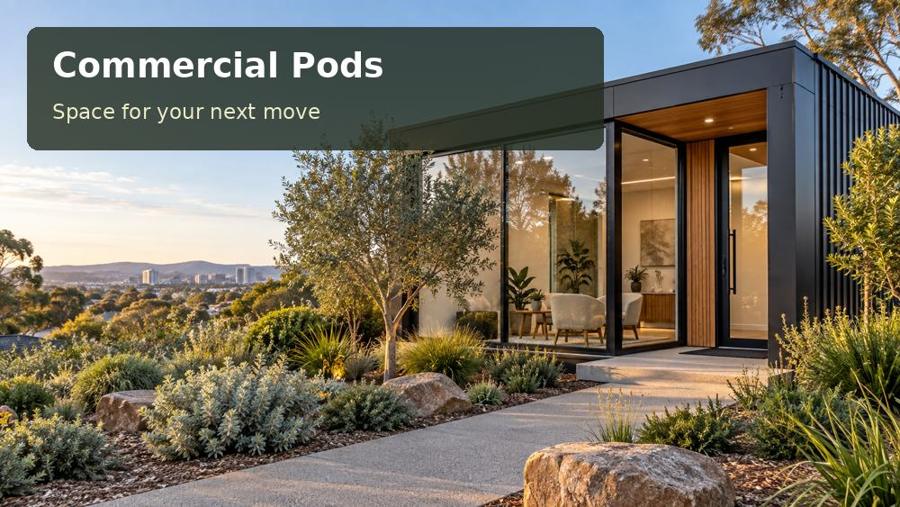
A site-led guide to a regional coordination office with visiting teams in Alice Springs, covering heat management and durable servicing, fabrication, outdoor connections and practical project planning.
A regional coordination office should help people think clearly, exchange information and prepare for the next task. In Alice Springs, a commercial pod can provide that focused environment while responding carefully to the local climate. Bureau of Meteorology statistics for Alice Springs Airport document hot summer days and cooler winter nights. That context supports a deliberate approach to shade and comfortable arrival, although final performance depends on the address, orientation and services design. Establish who uses the room, how long they stay and whether visiting teams bring equipment, luggage or documents that need their own storage.
Set out the information that matters
Keep the operational information simple and visible. A regional map, a daily schedule and a coordination screen should have distinct positions so they do not compete for attention. Provide a table where plans can remain open while staff continue telephone or computer work. Secure storage for shared devices can reduce desk clutter, and a separate visitor seat supports short conversations without interrupting the main working position. If the office also serves as a briefing room, plan the maximum attendance and cooling load around that activity rather than its quieter administrative hours.
Resolve the envelope before dispatch
A shaded verandah can temper the arrival experience and provide a place for brief discussions, while the internal envelope needs a coherent strategy for solar exposure and insulation. Consider glazing size before relying on mechanical cooling to compensate for it. Specify seals and maintainable finishes appropriate to the expected dust conditions. Arrange condensers and service panels where technicians can reach them without dismantling landscaping. For delivery, review distances, access restrictions and the site unloading method with the supplier; a remote project benefits from resolving missing components and service responsibilities before the building leaves fabrication.
Questions for the Alice Springs brief
For Alice Springs coordination, ask the team to identify the documents and devices that must be ready at the start of every shift. Give those items deliberate positions near the working zone. Review the longest likely briefing, including visitors unfamiliar with the premises. Where do they leave bags, and can they follow the displayed information without moving through desks? The servicing discussion should identify maintenance components and isolation points before dispatch. Where local completion is required, written responsibilities help the supplier and site team prepare a complete installation rather than resolve omissions after arrival.
Options worth drawing
| Option | Detail to develop | Next design task |
|---|---|---|
| A daily coordination table | Secure visiting-team storage | Survey sun exposure, access and available utilities |
| A map and schedule display | Dust-aware seals and surfaces | Plan maps, records and briefing surfaces together |
| A shaded short-briefing verandah | Remote delivery interface planning | Confirm the complete local installation interface schedule |
Workmanship and fit-out priorities
For a regional coordination base, maintainability should shape procurement. Ask which consumable components need periodic replacement and whether the installation allows technicians to reach them easily. Record the cladding, coatings, seals and equipment models for future maintenance. Factory quality checks should include the fitted joinery and service routes that may be difficult to inspect once the room is installed. Organise a component and interface checklist before dispatch, especially where a missing part would interrupt local work. At completion, trial the daily coordination process and confirm that the room, verandah and storage each have an unambiguous role.
- Secure visiting-team storage.
- Dust-aware seals and surfaces.
- Remote delivery interface planning.
The project sequence
- Describe daily coordination and visiting-team needs.
- Survey sun exposure, access and available utilities.
- Plan maps, records and briefing surfaces together.
- Confirm the complete local installation interface schedule.
- Test the working day and maintenance access at handover.
A proposal with a clear purpose
An Alice Springs coordination pod should provide a clear working environment with maintainable services. Resolve exposure and installation responsibilities before the fabricated building is dispatched.
Have a commercial pods proposal prepared for Northern Territory with the regional work brief, service access requirements and dispatch-to-installation responsibilities documented.
