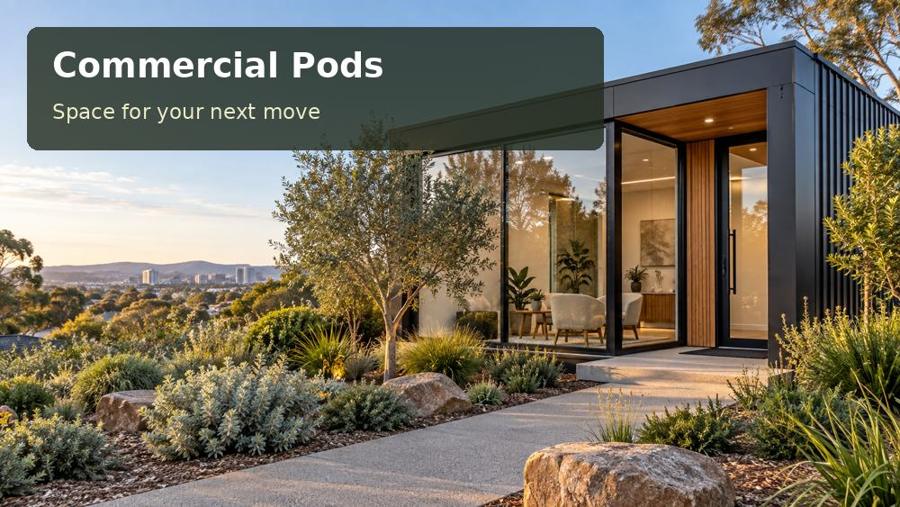
A site-led guide to a booking and equipment briefing room in Coffs Harbour, covering clean and dirty circulation, fabrication, outdoor connections and practical project planning.
An outdoor service business needs more than somewhere to answer the phone. Customers may arrive carrying damp clothing, equipment or questions that take longer than the booking itself. In Coffs Harbour, a commercial pod can become an orderly briefing base, with a welcoming front room and a separate place for returns. The Coffs Harbour council area includes a substantial coastline, but equipment requirements must follow the business itself rather than a general coastal theme. Begin with the sequence of a typical booking: arrival, explanation, collection, return and cleaning. Each transition deserves a deliberate position in the plan.
Separate bookings from equipment
Separate paperwork from equipment handling. A washable handover surface and clearly numbered storage bays can reduce confusion, while a quiet desk behind the briefing area keeps calls intelligible. If washing or cleaning is proposed, identify the relevant plumbing and wastewater arrangements with qualified advisers before drawing a drain on the concept plan. A covered external bay can keep bulky items outside the customer room, but it needs a secure closure and an unobstructed walking route. Choose flooring by the expected contamination and cleaning method, including grit brought in on shoes, rather than by appearance alone.
Detail the external handover edge
The building should also explain the business. Use a large, readable orientation graphic, good task lighting at the handover bench and a restrained display of the equipment customers actually use. A sheltered waiting deck can provide breathing room during busy collection periods, provided its capacity and access are assessed for the intended operation. Along exposed coastal sites, ask suppliers to specify compatible fasteners, cladding and coatings for the actual location. Inland Coffs Harbour properties may present a different exposure profile, so a location-specific specification is more useful than a blanket claim about coastal durability.
Questions for the Coffs Harbour brief
Ask the Coffs Harbour operator to describe a difficult return rather than an ideal collection. Where does a damaged item go while its condition is recorded? Can another customer collect equipment at the same time? Is the cleaning zone appropriately separated from the briefing material? These scenarios help establish storage and circulation needs that a quiet showroom drawing may conceal. Review the timetable too: a room used for early starts or evening returns needs a lighting and security arrangement appropriate to those actual hours, with controls staff can operate conveniently.
Options worth drawing
| Option | Detail to develop | Next design task |
|---|---|---|
| An indoor briefing bench | Numbered equipment storage | Record access and current drainage arrangements |
| An external equipment bay | Washable high-wear finishes | Separate customer circulation from stored equipment |
| Separate return and collection points | Covered handover circulation | Document every plumbing and fabrication interface |
Workmanship and fit-out priorities
Equipment movement provides a useful test of build quality. Review the door clearance with the largest item that will pass through it, including its handles or protective case. Ask the fabricator to detail junctions where cleaning water, grit or repeated impacts may occur. Wall protection should be replaceable where the operating pattern warrants it. Keep service access outside secure equipment cupboards unless a deliberate arrangement is designed. Before opening, carry out a complete mock booking with a colleague acting as a visitor. Any point where paperwork, waiting and equipment movement conflict should be corrected before customers arrive.
- Numbered equipment storage.
- Washable high-wear finishes.
- Covered handover circulation.
The project sequence
- Map collection, return and cleaning activities.
- Record access and current drainage arrangements.
- Separate customer circulation from stored equipment.
- Document every plumbing and fabrication interface.
- Trial simultaneous booking and return tasks.
A proposal with a clear purpose
Coffs Harbour booking space becomes more effective when briefing, collection and return have clear positions. A durable handover edge and orderly storage support the customer experience.
Bring the equipment inventory and booking sequence to a commercial pods proposal review in New South Wales, including the proposed cleaning and sheltered return arrangements.
