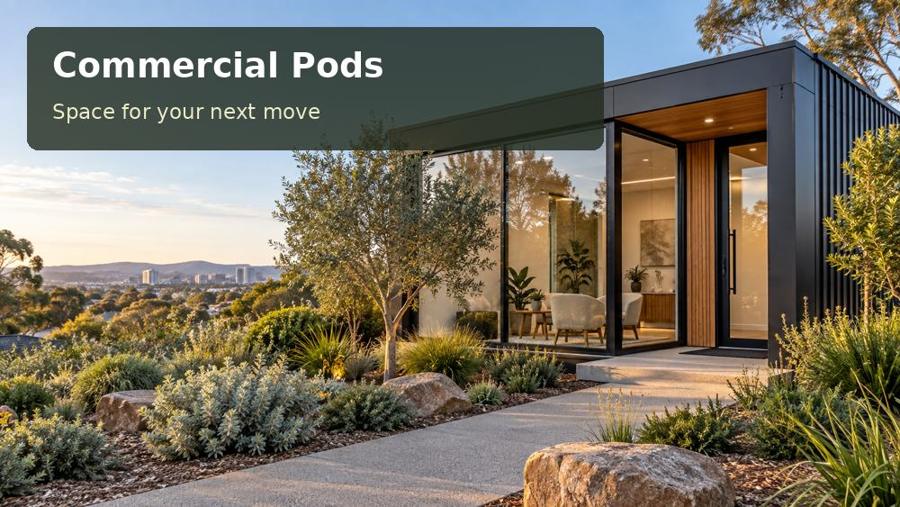
Create an Orange product-photography pod with practical camera clearances, controlled light, equipment storage and a considered relationship to the site.
A product photograph needs a consistent setting as much as a good camera. In Orange, a commercial pod can provide a dedicated studio where a business records products, prepares catalogue images and stores the equipment between sessions. Orange’s council-managed heritage information shows the importance of the city’s established character; on a relevant property, the new room’s setting deserves early architectural consideration. Its internal purpose, however, should be precise. Decide what will be photographed, how often the setup changes and whether staff need to work beside the shoot. Those choices define a useful studio more clearly than a decorative backdrop.
Give the camera a workable distance
Measure the largest regular product and discuss the shooting arrangement with the photographer. Camera position, lens choice and lighting equipment affect the depth and width needed. A compact room may serve small objects well while making full-size furniture difficult to photograph. Do not commit to dimensions from the product footprint alone. Include clearance for lights, stands and the person moving around them. Mark safe cable routes and provide a separate surface for preparing items so the backdrop remains available for the actual photograph.
Storage should preserve the consistency of the setup. Allocate positions for lenses, lights, backgrounds and stands, with suitable protection for delicate equipment. A wall-mounted background system requires appropriate fixing provisions coordinated before linings are closed. If large backdrop rolls arrive regularly, check their route through the entrance and into storage. Leave room to inspect a product before it reaches the shooting area. Packaging, labels and minor cleaning can otherwise consume the same surface needed to stage the image.
Control light with deliberate architecture
Discuss whether the business wants daylight photography, artificial-light consistency or both. These approaches can call for different glazing and shading arrangements. An uncontrolled bright window can make repeated photographs difficult to match, while a completely closed room may not suit the preferred creative method. The photographer and designer should review the options together. Select interior finishes for their role in the lighting environment, including unwanted reflections or colour casts. Test samples under the intended setup rather than choosing the room colour from a showroom impression.
Comfort and services still matter in a controlled studio. Lighting and equipment loads should be described to the electrical designer, and occupancy should inform ventilation and cooling. Equipment noise may affect recorded video if that forms part of the business’s work. Identify those requirements explicitly. For the Orange site, review planning context, measured levels and access before selecting the exterior. A contemporary pod beside an older building needs a considered scale and connection, with relevant address-specific advice sought where required.
Select the studio format
| Photography approach | Useful room feature | Decision before fabrication |
|---|---|---|
| Small-product tabletop work | Stable staging bench beside the backdrop | Bench size and camera access |
| Larger freestanding objects | Clear floor and wide handling route | Lighting clearance around the item |
| Repeatable video demonstrations | Quiet recording position and controlled background | Service noise and equipment storage |
The best format can accommodate some variation without pretending to be a universal studio. Ask the proposal to identify the largest credible session and show its equipment in place.
- Provide a separate inspection and preparation surface.
- Document fixing provisions for background supports or suspended fittings.
- Keep fragile equipment storage away from the handling path.
- Confirm how blinds or blackout measures operate around the installed lights.
From photographic brief to finished room
- Assemble examples of the products and images the business needs to produce regularly.
- Trial the shooting geometry with the photographer, including stands, preparation space and circulation.
- Investigate the Orange property’s access, levels and relevant architectural or planning context.
- Coordinate light control, equipment power, background supports and service noise before manufacture.
- Complete a representative shoot at handover and record any setup changes needed for repeatable work.
A studio that keeps its promise
An Orange photography pod should make preparation organised and the shooting environment controllable. A clear technical brief protects those benefits through fabrication and installation. Discuss commercial pods for New South Wales with product measurements, photographer input and photographs of the proposed site. Request drawings that show the complete working setup and a scope that identifies the local connection work as carefully as the finished studio interior.
