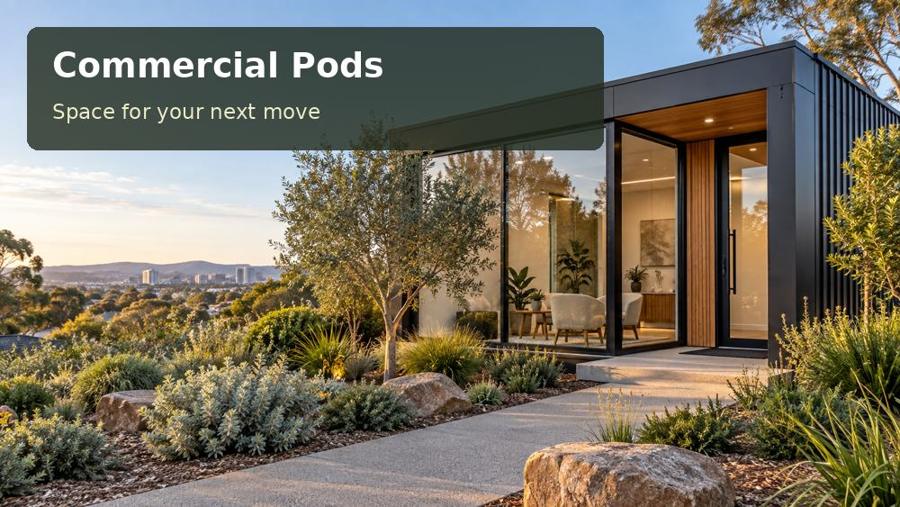
Plan a Tamworth voice and media pod with equipment-led layouts, specialist acoustic assessment, coordinated ventilation and practical recording workflows.
A clear voice recording begins with a room that supports the work around the microphone. In Tamworth, a commercial pod can provide a dedicated setting for spoken content, interviews and media preparation beside an existing business. Tamworth council includes Peel River access and environmental improvements among its local projects, reflecting a city where outdoor settings and working activity have distinct roles. A recording pod should be equally deliberate about its role. Define whether the business needs narration, interviews, editing or live conversations before choosing dimensions, windows or service equipment. Each activity introduces different requirements.
Design the recording position first
Start with the people and equipment rather than an empty room. A single narrator needs a useful microphone and script position; an interview needs equivalent seats and sightlines. Video adds camera distance, lighting and a background. Draw these arrangements with the actual equipment, including stands and headphones. Keep the operator’s controls convenient without filling the performer’s space with screens. If editing is a regular activity, consider a separate workstation or a furniture arrangement that can change without dismantling the recording setup.
Acoustic treatment and sound isolation have different purposes. Discuss both with an appropriate specialist instead of assuming soft wall panels solve external noise. Nearby traffic, machinery, voices and mechanical services may need to be addressed through the building construction and placement. The specialist can establish what is appropriate for the business’s intended recordings. Be precise about expectations; a pod described as quiet is not a quantified studio performance. The proposal should identify the scope of assessment and the details required to support the intended use.
Coordinate the services with the sound brief
Ventilation and cooling are essential even when noise control is important. Ask the mechanical designer how the room will operate during recording, including equipment heat and maximum attendance. Service noise, airflow at the microphone and access for maintenance deserve attention. Avoid planning to switch everything off as the permanent comfort strategy unless the responsible advisers have assessed the operating pattern. Locate power and data connections so cables stay away from circulation, and provide suitable fixing provisions for heavy equipment or mounted screens before fabrication.
At the Tamworth property, survey levels and identify the delivery and placement route. The pod’s location should balance convenient staff access with relevant noise sources, not simply occupy the nearest spare corner. External shade can help the envelope where appropriate, but the design should also examine glazing and insulation. If windows are desired for a pleasant editing environment, compare controllable light and sound implications. A sheltered entrance can support equipment handling, with roof water and threshold levels resolved to the site’s designed drainage arrangement.
Compare the working formats
| Media activity | Space to prioritise | Review with the project team |
|---|---|---|
| Narration and scripted voice | Comfortable microphone and reading position | Background noise and recording equipment layout |
| Two-person interviews | Balanced seats and clear eye contact | Microphone clearance and participant circulation |
| Video content with editing | Camera depth and a separate screen surface | Lighting, background and service connections |
One primary format can guide the build while a second format informs useful flexibility. The room should not be sold as suitable for every production task without a complete technical brief.
- Provide closed storage for microphones and delicate accessories.
- Keep a clear surface for scripts and interview preparation.
- Show lighting controls reachable from the operating position.
- Document which acoustic and service details depend on specialist design.
Develop the studio in five deliberate stages
- Gather representative recordings or content plans that explain the desired production use.
- Mock up microphones, seats, cameras and work surfaces at their required operating distances.
- Assess the Tamworth site for relevant noise, access and existing service conditions.
- Coordinate acoustic advice, ventilation, equipment power and fabrication provisions in one drawing set.
- Trial the installed room with a complete recording session, including its usual services operating.
A room shaped by the recording task
A Tamworth voice studio should make preparation orderly and the recording environment appropriately designed. Technical coordination gives that ambition a credible basis. Bring your equipment list and production examples to a commercial pods discussion in New South Wales. Request a room-specific proposal that identifies the sound brief, service responsibilities and local installation work, so the finished pod can be assessed against the business’s actual content needs.
