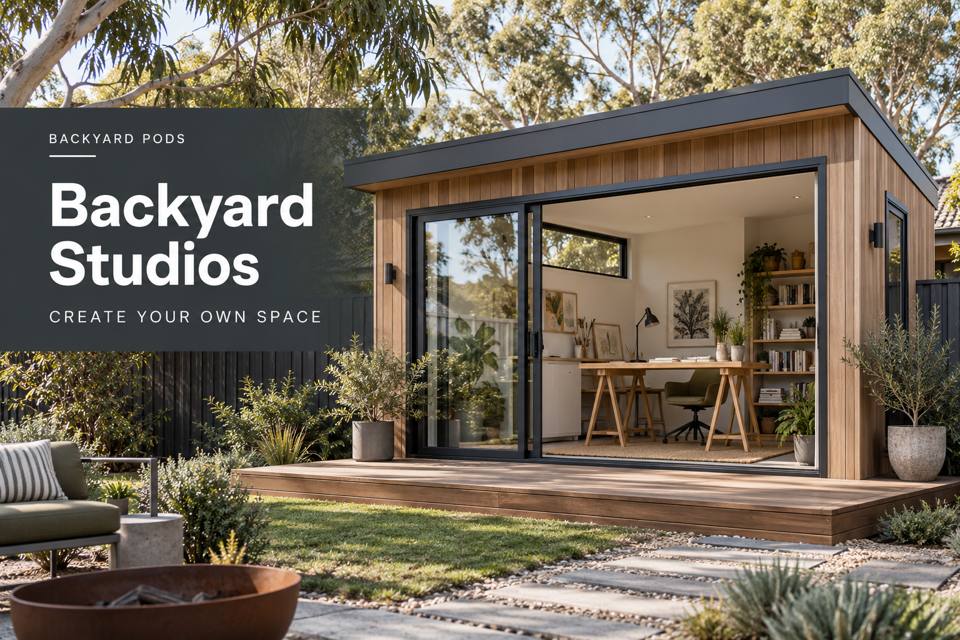
Jewellery photography combines precise presentation with careful handling of valuable small objects.
Explore Backyard Studios in Encounter Bay with this specific use in mind.
Jewellery photography combines precise presentation with careful handling of valuable small objects. An Encounter Bay backyard studio should make those two priorities visible in the layout. Begin with the largest display arrangement and the smallest item that must be tracked, then plan shooting, review and secure storage around them.
Contain the small-object workspace
Choose a staging surface where clasps, stones and props can be seen clearly. Discuss a removable work mat or tray appropriate to the objects, with a known return location. Avoid placing delicate staging beside a busy doorway. The photography setup should have enough usable depth for hands and tools as well as the attractive arrangement shown to the camera.
Coordinate reflections deliberately
Polished objects can reveal the room around them. Test the selected background, lighting modifiers and camera position with representative pieces before fixing a permanent bench. Adjustable shading may help manage variable daylight. Keep general room lighting distinct from the photographic arrangement, allowing safe preparation and packing without forcing the production lights to serve every activity.
Review colour and detail in one place
Position the review screen where it can be used without crossing a lens or light stand. Record the equipment used for capture and colour review so electrical and data provision are based on an actual list. A drawer for backgrounds and flat accessories should support their real dimensions. Labelled examples help maintain consistency between separate product sessions.
Close the session with a counted return
Treat packing as part of the design, not the final spare corner. Provide a clean checking surface and discuss suitable secure storage with the relevant provider. Inventory procedures remain the owner's responsibility. A room can support those procedures through visible separation between received objects, photographed objects and completed returns, reducing ambiguity when several pieces look similar.
◈ Assess the garden connection
In Encounter Bay, the proposed access must accommodate the arrival of carefully packed product cases, including any change in level between the home and the pod. Take dimensions at the narrowest gate and show the chosen building footprint on a measured garden plan. Ask qualified project advisers to determine support, founding conditions and drainage; the locality name cannot establish those details. Preserve maintenance access around the building and agree protection for trees or planted boundaries. Household animals should have an alternative route while deliveries and preparation take place.
Coordinate fabrication, services and handover
Workmanship becomes easier to compare when the proposal names the staging bench and photographic background supports, its materials and its installation sequence. Discuss the delivery vehicle, unloading position and any required site assembly with the provider rather than assuming unrestricted access. Include camera equipment, review screens and the selected lights in a coordinated trade brief. The review drawing should show a clean packing surface clear of the occupied photography setup, including the space consumed by open storage and real users. Ask for material references, relevant care instructions and access information at completion; these records support informed maintenance after the initial presentation.
▦ Compare the project decisions
| Priority | Brief information | Practical review |
|---|---|---|
| Staging | Representative objects, props and work tray | Check hand access around the arrangement |
| Reflection control | Modifiers, background and camera position | Photograph a polished sample |
| Return checking | Packing surface and item records | Keep received and completed items separate |
Keep these priorities visible
- Staging: Representative objects, props and work tray. Check hand access around the arrangement.
- Reflection control: Modifiers, background and camera position. Photograph a polished sample.
- Return checking: Packing surface and item records. Keep received and completed items separate.
✓ Prepare the enquiry step by step
- Assemble a representative product session with the existing equipment.
- Measure light stands and modifiers in their working positions.
- Specify flat storage against the largest background sheet.
- Discuss secure storage requirements with an appropriate provider.
- Test the counted packing sequence before approving permanent joinery.
Related local project guides
For the complementary workshops decisions in Encounter Bay, compare Encounter Bay Workshops for Bicycle Component Organisation around a Defined Service Bench.
For a different backyard studios use in Port Elliot, review Port Elliot Backyard Studios for Botanical Drawing with Controlled Daylight.
Summary and next step
Good small-object photography depends on controlled presentation and clear handling. Reserve staging space, test reflections and provide a separate return check. These priorities turn the studio enquiry into a precise brief for both image quality and dependable daily organisation. Bring the completed checklist to your Encounter Bay backyard studios enquiry, with the property measurements and equipment list. Compare the backyard studios range and the South Australia pages against that brief.
Regional references
For local landscape context, consult the council regional information. The Victor Harbor regional climate record offers background for seasonal planning; it does not establish the proposed property's exposure or construction requirements.
