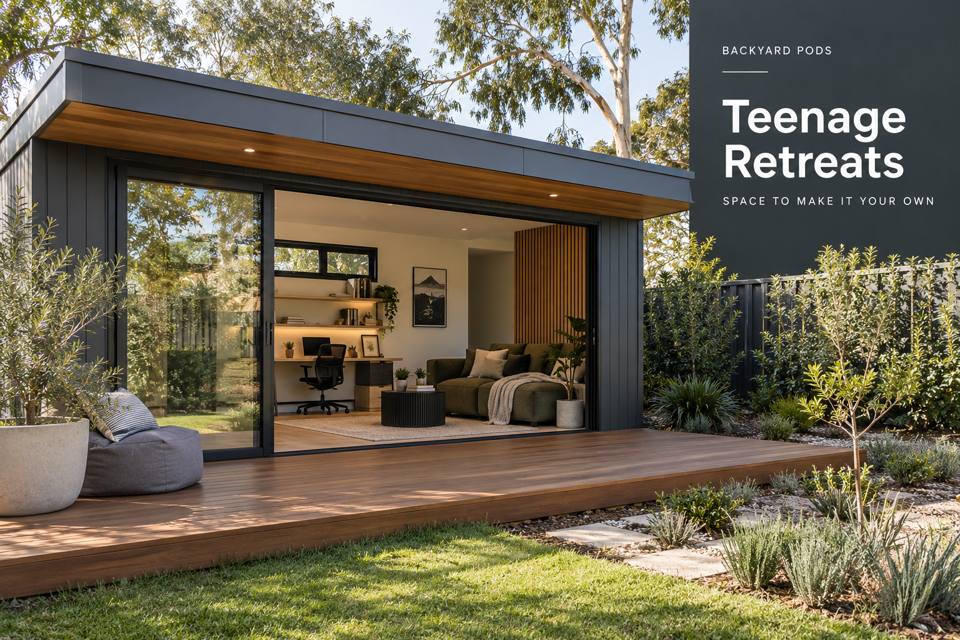
Plan a Forster teenage retreat with organised game storage, a clear review shelf and comfortable space for shared recreation.
A teenage retreat can support enjoyable shared recreation when games and their components have clear destinations. In Forster, a board-game review shelf offers a modest but useful feature: a place to identify what is available, check complete sets and choose an activity. The design should involve the young people who will use the room. Their actual habits provide a stronger brief than a themed interior that looks appealing but is difficult to maintain.
◈ Ask users how games are selected
Forster's lake and ocean setting provides an appealing context for outdoor life, while a retreat can offer a separate place for indoor recreation. At the property, review its relationship to the house and agreed household arrangements. Describe visiting friends, expected hours and the number of users. The intended use should be stated clearly for professional advice rather than inferred from the word retreat.
Gather the games currently used and identify the most frequent choices. Measure boxes and the components spread out during play. Ask what makes a set difficult to find or pack away. A review shelf should solve those ordinary problems, with space to check a box before it is carried to the table rather than simply display colourful covers.
Keep storage readable and manageable
Group games in a way users understand, such as by typical group size or activity. Avoid a complicated classification system that no one maintains. Plain labels can be reinforced by simple pictograms where useful, but the written names should remain clear. Leave space for a small number of future additions without allocating most of the room to unused storage.
Discuss shelf supports and door movement with the carpenter. Larger boxes and heavier collections need appropriate construction. A return position can hold a set awaiting a component check, separate from games ready to use. This distinction encourages a practical reset routine without covering the room in lengthy rules or turning its recreation furniture into permanent sorting space.
▦ Give each part of the game routine a home
| Position | User benefit | Fit-out detail |
|---|---|---|
| Ready shelf | Shows available activities | Box sizes and easy access |
| Review surface | Supports a quick contents check | Complete set spread |
| Return compartment | Identifies unfinished packing | Clear label and modest capacity |
| Playing table | Supports shared recreation | Occupied seating and movement |
Coordinate the room's comfort and boundaries
Lighting should make cards and pieces readable from all seats. Assess the actual window orientation and adjustable shade rather than assuming a garden outlook provides suitable task light. Review power outlets and any equipment with the electrician. Ventilation and environmental comfort should respond to occupied hours and the number of users, with professional advice on the building systems.
For an New South Wales proposal, obtain address-specific advice on intended use, ground conditions and services. Review drainage, supports and transport access before finalising fitted furniture. Keep any proposed sleeping function explicit and subject to relevant assessment; recreational use does not establish permission for accommodation. A written household brief and construction scope help everyone understand the room's purpose.
Useful user-led decisions include:
- Which games are used regularly and which can leave the collection.
- A clear way to report or locate missing components.
- The normal number of players and visiting friends.
- A reset routine agreed by the household and actual users.
✓ Develop the retreat with its users
- Review the current game collection together and select useful sets.
- Measure boxes, review space and an occupied playing session.
- Trial labels and the ready-versus-return storage arrangement.
- Coordinate comfort, services and site advice with professionals.
- Request a complete building and furniture scope for comparison.
Make shared recreation easy to start
Explore teenage retreats with a practical, collaborative games brief. A Forster retreat can feel personal and welcoming when young people can find, play and return their preferred activities easily. Thoughtful storage and a clear room purpose provide lasting value through everyday use, supported by measured furniture and coordinated construction.
