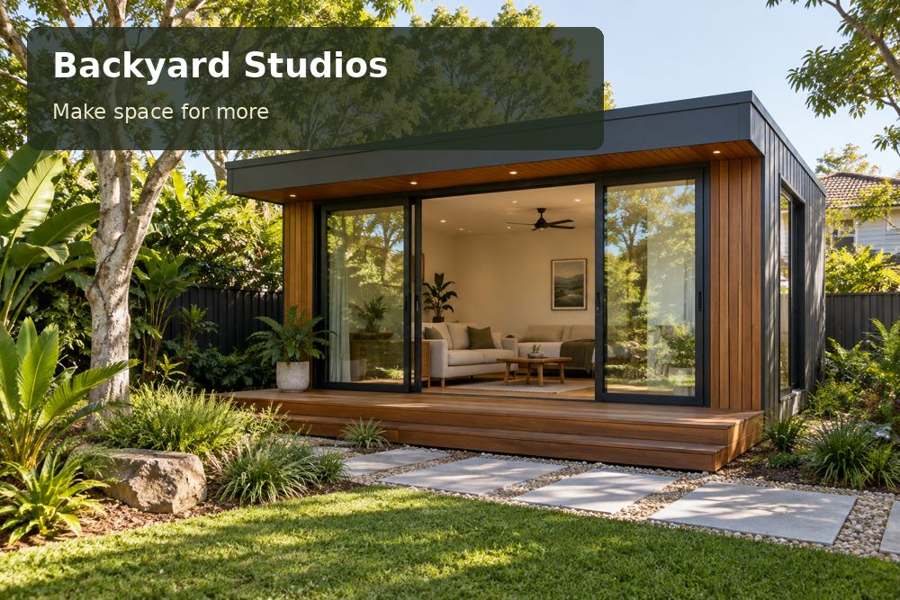
Create a Grafton oral-history studio with a considered interview position, labelled recordings and space to organise family photographs.
Family history often exists in conversations, photographs and scattered notes rather than one finished record. In Grafton, a backyard studio can provide a place to bring those sources together. Plan the room around interviews, listening and careful organisation, with appropriate consent and handling of personal information. A compact garden setting can offer a purposeful place to return to the project without leaving recording equipment and documents spread across the household.
Let local history inform the project responsibly
Grafton's heritage trail introduces the city's architecture, streets and relationship with the Clarence River. Those public references can help a family place its own memories in a wider setting. They do not establish the history of a particular person or property. Keep verified public information distinct from recollections and identify uncertainty in the records you create.
Within New South Wales studio choices, an oral-history room benefits from an intentional interview position. Decide whether conversations involve one guest, several relatives or remote participants. Measure seating and equipment together. Provide a comfortable place for papers and photographs without forcing participants to hold them throughout the conversation.
Arrange recording and review as separate activities
A basic interview setup may use a recorder or computer and selected microphones. Describe the actual equipment to the fit-out team and obtain suitable installation advice where needed. Avoid promising broadcast-quality sound from an ordinary building specification. Observe household and garden activity during the intended recording hours and discuss acoustic requirements honestly with relevant professionals.
A second work position can support listening, transcription and labelling after the interview. Keep active material together under a clear project reference. Distinguish original photographs from copies used for discussion. Fragile or valuable documents may need specialist preservation advice; a general studio is not an archival repository by default.
Compare the oral-history work areas
| Area | Project function | Practical detail |
|---|---|---|
| Interview seating | Supports a comfortable conversation | Participants, equipment and sightlines |
| Review desk | Allows listening and note checking | Headphones, screen and documents |
| Project storage | Keeps related material identifiable | Labels, permissions and retention method |
Agree how recordings will be named, backed up and shared before the collection grows. Seek permission for recording and any intended publication, especially when other people's stories or private information are involved. A useful organisational system records who contributed, when the conversation occurred and what restrictions apply.
Build a comfortable place for conversation
Choose light that supports both participants and document viewing. Glare across a photograph or a bright window behind a guest may complicate the session. Assess the actual room position and adjustable coverings. If video is used, test the intended seating and background instead of assuming the entire glazed wall will be helpful.
Garden access, ground levels and supports need assessment for the address. Clarence Valley Council provides property information that can guide early investigation of constraints. Coordinate roof-water disposal, electrical work, ventilation and any mechanical equipment through appropriate professionals. The design should retain maintenance access while providing a clear route for visitors carrying personal material.
Prepare the family-project brief:
- Interview participants, session length and intended recording method.
- Documents, photographs and any preservation advice needed.
- Consent, sharing restrictions and the recording-storage system.
- Furniture, privacy and access preferences for visiting relatives.
Prepare the studio and collection together
- Define the project's purpose and agree permission for recording and sharing.
- Trial a conversation with the actual equipment and representative photographs.
- Measure interview, review and storage areas on an occupied room plan.
- Obtain site and building advice, then coordinate the electrical and comfort services.
- Request an installation scope and establish the collection's labelling and backup routine.
Give family memories an organised setting
Visit backyard studios with a Grafton brief centred on listening and responsible record keeping. Suitable seating, manageable equipment and clear project storage can make a small studio valuable across a long family-history project. Thoughtful organisation allows personal recollections to develop into a collection whose sources and permissions remain understandable.
