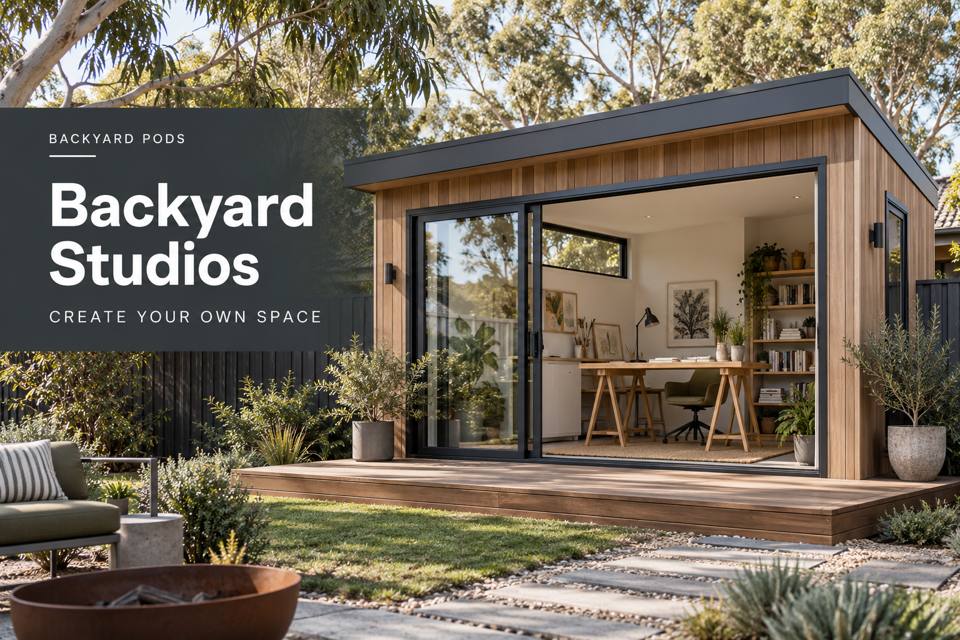
A music practice studio in Hindmarsh Valley should be designed around the instrument and the intended hours of use.
Explore Backyard Studios in Hindmarsh Valley with this specific use in mind.
A music practice studio in Hindmarsh Valley should be designed around the instrument and the intended hours of use. A detached room does not establish sound isolation by itself. Set out playing, tuning, listening and instrument storage, then ask qualified advisers to assess the acoustic and building requirements for that particular practice.
Map the playing footprint honestly
Measure the instrument, stand, stool and the musician's movement together. Allow the playing position to be reached without carrying a case over cables or stored accessories. If two people rehearse, show both in the drawing. The room dimensions should reflect the largest planned arrangement; occasional use still matters when it determines whether the space can be operated safely and comfortably.
Distinguish room sound from isolation
Describe unwanted sound inside the room separately from sound transmitted outside it. Absorptive furnishings may influence the listening experience but are not evidence of an isolation rating. Provide the adviser with instruments, amplification details, practice hours and nearby sensitive uses. Ask for the scope and limitations of any proposed treatment in writing rather than buying panels against a broad promise of quietness.
Give instruments a considered resting place
Use the instrument maker's care advice when discussing storage conditions and supports. Cases, music stands and sheet music need measured homes that preserve the playing area. Plan adjustment and maintenance access for nominated conditioning equipment. A garden room with glazing should have shading assessed against the occupied layout and the instruments, not simply against a preferred facade appearance.
Record practice and reset the space
Place recording or playback equipment where it can be reached between passages without disrupting the instrument position. Label cables and provide suitable storage for small accessories. Electrical work should follow a defined equipment schedule. A short end-of-session reset keeps the next practice focused: return the instrument as instructed, clear the movement route and retain notes where they can be retrieved easily.
◈ Assess the garden connection
For the Hindmarsh Valley site, investigate instrument cases moving between parking and the practice room before settling the room position. Map the chosen approach, existing ground levels and areas that must remain accessible during construction. Ask the responsible designer to coordinate the foundation proposal with site assessment and water management. A rural-sounding address is not evidence of particular soil or an unrestricted delivery route. Retained trees and garden habitat deserve a deliberate protection plan, with pets kept clear of work. Include any proposed terrace in the measured level discussion.
Coordinate fabrication, services and handover
Before accepting manufacturing dimensions, review the largest instrument and assessed acoustic fit-out components against the agreed doorway and delivery route. Clarify whether assembly occurs on site and who protects work while the envelope is completed. Coordinate recording equipment, conditioning and the nominated practice lights with the responsible trades, allowing equipment to be reached for maintenance. Include the playing footprint beside a clear instrument-case return route in the final layout review. A useful handover pairs inspection of finished edges and fittings with product references and operating instructions, giving the owner a practical record rather than an unexplained collection of offcuts.
▦ Compare the project decisions
| Priority | Brief information | Practical review |
|---|---|---|
| Playing area | Instrument, musician and occasional partner | Mock up the largest session |
| Acoustic scope | Sources, hours and nearby receivers | Seek an assessed treatment proposal |
| Instrument care | Maker guidance and case dimensions | Coordinate storage and conditioning |
Keep these priorities visible
- Playing area: Instrument, musician and occasional partner. Mock up the largest session.
- Acoustic scope: Sources, hours and nearby receivers. Seek an assessed treatment proposal.
- Instrument care: Maker guidance and case dimensions. Coordinate storage and conditioning.
✓ Prepare the enquiry step by step
- List instruments, amplification and intended practice hours.
- Mark the occupied playing arrangement at full scale.
- Ask appropriate advisers about acoustics and sound transmission.
- Coordinate supports and storage with instrument care guidance.
- Review the electrical schedule and end-of-session reset routine.
Related local project guides
For the complementary workshops decisions in Hindmarsh Valley, compare Hindmarsh Valley Workshops for Hand-Tool Woodwork with a Clear Clamping Zone.
For a different backyard studios use in Port Elliot, review Port Elliot Backyard Studios for Botanical Drawing with Controlled Daylight.
Summary and next step
A useful music studio brief respects the musician, the instrument and nearby occupants. Measure playing space, obtain appropriate acoustic advice and define care requirements. Clear expectations give the design team a stronger basis for a practice room that can be assessed and maintained sensibly. Bring the completed checklist to your Hindmarsh Valley backyard studios enquiry, with the property measurements and equipment list. Compare the backyard studios range and the South Australia pages against that brief.
Regional references
For local landscape context, consult the council regional information. The Victor Harbor regional climate record offers background for seasonal planning; it does not establish the proposed property's exposure or construction requirements.
