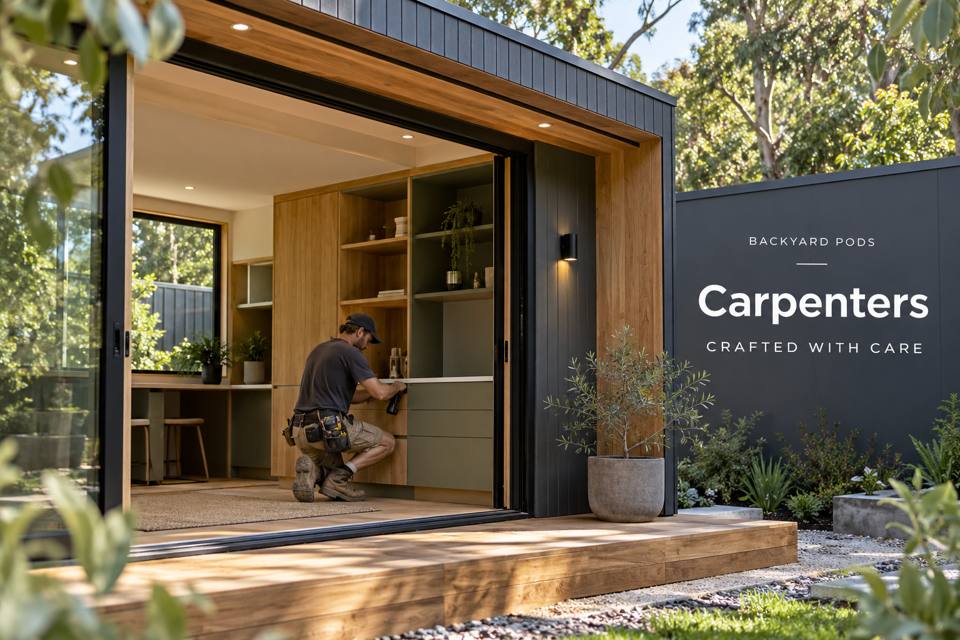
Plan Kiama pod window-seat joinery with verified dimensions, practical storage openings and a finish suited to everyday use.
A window seat can make a garden pod feel more complete, but its value depends on more than an attractive cushion. In Kiama, a carpenter can create a fitted position that supports sitting, stores selected belongings and respects the glazing beside it. Begin with the actual room dimensions and the objects intended for storage. The result should be useful joinery that feels integrated with the building rather than a decorative box that complicates access.
Define how the seat will be used
Ask whether the position supports reading, conversation, changing footwear or occasional waiting. Different uses affect the desired depth, height and relationship to other furniture. Identify the expected occupants and discuss any individual access needs with the designer. A fitted seat should be assessed in the occupied room, including the walking route in front of it.
Kiama's coastal setting can inspire a window position facing the garden, while the particular pod determines the useful view. Record window operation, sill details and covering movement. The joinery should not obstruct ventilation, conceal required access or interfere with the glazing system. Have those interfaces reviewed by the relevant building professionals before fabrication.
Measure storage from the contents
For New South Wales carpentry enquiries, provide dimensions of the items that will live beneath or beside the seat. Hinged lids, drawers and cabinet doors create different opening movements. A large internal space is not useful if retrieving a blanket requires moving another piece of furniture every time. Decide how the seat remains usable while storage is opened.
| Joinery feature | Working purpose | Detail to verify |
|---|---|---|
| Seat structure | Supports the intended occupants | Construction and fixing design |
| Storage opening | Allows practical retrieval | Clearances with nearby furniture |
| Window interface | Keeps building elements operable | Glazing, coverings and service access |
The carpenter needs confirmed dimensions and the source of those measurements. Preliminary drawings may be enough for early pricing, but final fabrication can require an as-built check. Agree when that measurement happens and which person coordinates any discrepancies. This makes the installation sequence more reliable and gives the workshop information it can use confidently.
Coordinate materials and comfort
Compare finish samples against cleaning requirements, contact with upholstery and the intended room conditions. Timber species, board products, edge details and coatings should be selected on suitable information rather than appearance alone. Ask for care instructions and identify any maintenance expected around the window position.
If the seat includes a reading light or nearby outlet, coordinate those positions before the cabinet is built. Qualified trades should establish the electrical work and keep access available. Discuss the relationship to cooling airflow and window shading. Avoid hiding service points inside inaccessible storage simply to create a continuous finished face.
Bring the carpenter:
- The intended sitting activities and expected occupants.
- Dimensions of stored objects and preferred opening method.
- Verified room, window and service measurements.
- Finish samples, upholstery decisions and care expectations.
Develop dependable fitted joinery
- Trial the seat position with nearby furniture and the intended user.
- Measure storage contents and compare lid, drawer and door movements.
- Confirm building interfaces, structural support and final measurement responsibilities.
- Approve fabrication drawings, materials and coordinated service positions.
- Inspect seating, storage operation and window access at installation, then retain care information.
Ask for craftsmanship with a practical brief
Visit carpenters with a clear picture of how the window seat should work. Kiama pod joinery becomes more persuasive when comfortable sitting and useful storage are supported by careful measurement. Documented construction details and installation responsibilities let the carpenter's skill show in the finished room, giving you a stronger basis for comparing quotations and a fitted feature that earns its place in everyday use.
