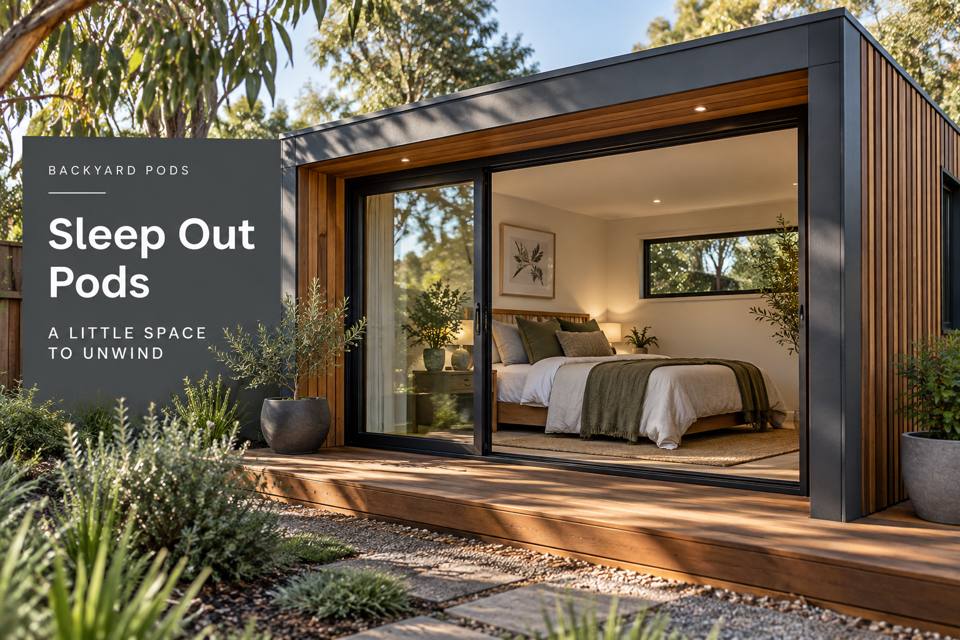
Plan a Kiama sleep-out with practical bedside storage, understandable lighting controls and clear movement around the bed.
The details within reach of the bed often determine how comfortable a visitor feels in an unfamiliar room. A sleep-out pod in Kiama can provide a considered bedside arrangement with space for glasses, a book, water and personal devices. The room should support rest without making essential items difficult to find. Begin with the intended visitor and proposed sleeping use, then plan the bed, circulation and controls as one connected layout.
Describe the sleeping arrangement accurately
Specify who uses the room, how often and which facilities are proposed. Sleeping accommodation should be assessed for its actual function; a garden-room label does not resolve the approval pathway. Provide the designer with an honest brief covering overnight use and any bathroom or cooking facilities so the project can be evaluated appropriately.
Kiama's coastal setting can inspire a light, calm interior. The specific garden position still determines privacy, daylight and the outdoor approach. Examine views between the sleep-out, principal home and neighbouring properties. A pleasant window outlook should be balanced with adjustable coverings that a guest can operate confidently at night.
Give personal items a dependable place
Within New South Wales sleep-out planning, measure the chosen bed and both occupied bedside positions. A narrow room may need a carefully dimensioned ledge or fitted cabinet, but the furniture should not make entry to the bed awkward. Allow space for the visitor's normal belongings without placing them on the floor beside the exit route.
| Bedside need | Useful provision | Detail to check |
|---|---|---|
| Reading | Reachable light and stable book position | Glare and switch location |
| Small personal items | Defined surface or drawer | Comfortable access from the bed |
| Night-time movement | Clear floor route | Furniture edges and door movement |
Use the actual objects when reviewing cabinet size. A lamp, drinking vessel and pair of glasses can occupy more space than an empty bedside table suggests. Discuss individual access needs with the designer where relevant. Avoid treating compact furniture as universally suitable for every visitor.
Make controls understandable
Arrange lighting switches so a guest can enter, settle and move around the room without searching. General and reading lights may need separate control. Coordinate outlet positions with the electrician and the chosen furniture, keeping charging leads out of the walking route. Explain any unfamiliar comfort controls through clear, concise guest information.
Ventilation and air-conditioning should be reviewed for overnight occupancy. Share the intended bed position with the installer so airflow, equipment noise and servicing can be considered. Include the management of roof water and condensate in the full installation brief. The room's comfort depends on glazing, shade, insulation and services working together for the particular site.
The sleeping brief should contain:
- Bed dimensions and the usual visitor arrangement.
- Personal items kept beside the bed overnight.
- Reading preferences, control locations and privacy expectations.
- Proposed facilities and the route to any shared amenities.
Resolve the room before ordering furniture
- Define the sleeping use and seek address-specific advice on its requirements.
- Trial the bed and bedside surfaces at full scale with an occupied layout.
- Assess site levels, supports, drainage and the path used after dark.
- Coordinate lighting, outlets, window coverings and comfort equipment around the bed.
- Review a complete quotation and test the controls with someone unfamiliar with the room.
Make a small room feel well prepared
Explore sleep-out pods with a bedside brief that reflects real visitors. A Kiama sleep-out can feel thoughtfully equipped when essential items stay reachable and the lighting is easy to understand. Clear circulation and coordinated services add value without excessive furniture. A documented construction and fit-out scope then gives you a more reliable basis for selecting a proposal that supports comfortable, properly planned overnight use.
