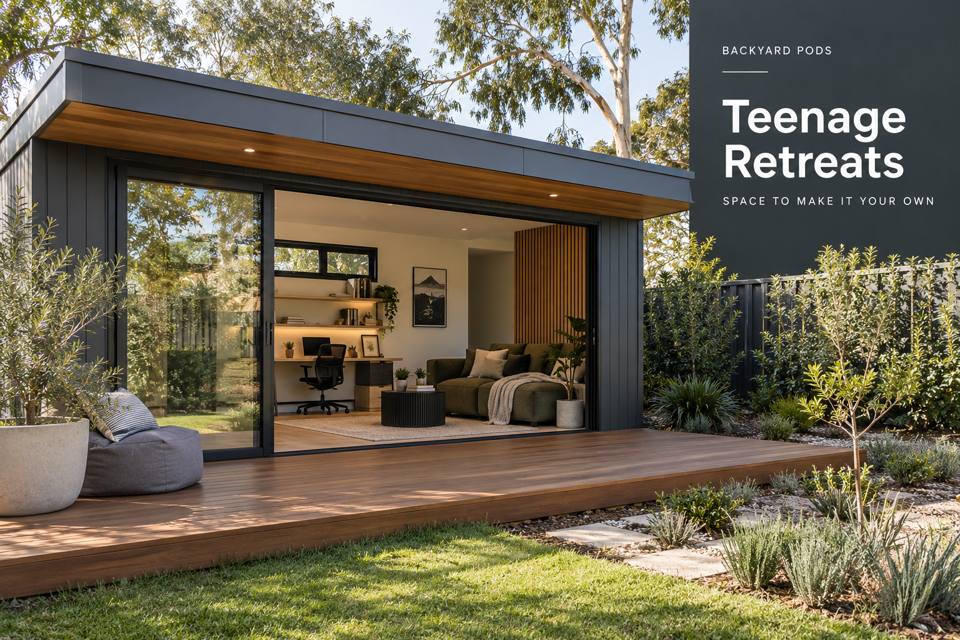
Plan a Kiama teenage retreat with a useful writing desk, selected book storage and a comfortable place to read.
A teenage retreat can support more than screen time. In Kiama, a garden room planned for reading and personal writing can provide a useful desk, an inviting seat and a clear home for notebooks and books. Begin with the teenager's actual interests rather than prescribing how the room should look. The most persuasive design gives everyday activities a comfortable setting while keeping household expectations and the proposed building use clear.
Ask how the room will be used
Find out whether writing happens on paper, on a laptop or through a combination of both. Discuss the books consulted during a normal session and the space needed for current projects. A desk should accommodate the work in progress, while the reading seat should offer a different posture without crowding the entrance. Keep future flexibility in mind without designing an undefined room for every possible use.
Kiama's coastline and beaches offer a strong local backdrop for personal stories and reflection. The backyard location still requires a practical assessment of privacy, household visibility and access. Observe the proposed room from the main home and neighbouring positions. A garden connection should feel considered, with window coverings and planting assessed as part of the actual site.
Separate writing from relaxed reading
For New South Wales teenage-retreat proposals, describe the intended activities honestly. A daytime study and leisure room is different from proposed sleeping accommodation. Seek advice for the actual use before adding furniture that implies another function. Within the fit-out, give the desk a clear surface and reserve a defined position for books currently being read.
| Retreat activity | Useful position | Detail to discuss |
|---|---|---|
| Personal writing | Desk with notebook and device space | Working depth and useful light |
| Relaxed reading | Comfortable seat away from the desk | Viewing angle and book position |
| Project organisation | Accessible shelf or drawer | Separation of active and completed work |
Choose storage with the teenager, using the sizes of real books and notebooks. A limited, well-arranged collection may be more useful than shelves covering every wall. Consider how the room will be tidied and what returns to the house each day. Clear decisions at the beginning help the room retain its purpose after the initial excitement.
Coordinate comfort with household use
Lighting should support reading at both positions. Trial lamp placement while seated and check for screen reflections or shadows across a notebook. General illumination also needs to make the route to the door understandable after dark. A qualified electrician should establish outlet and lighting arrangements, with cables kept clear of circulation.
Discuss ventilation, shading and any cooling equipment according to the expected hours and session lengths. Household conversations should establish appropriate access, device use and maintenance expectations. The designer can then coordinate privacy and the outdoor approach with those decisions. Include supports, drainage and service access in the building scope rather than allowing furnishings to conceal unresolved installation details.
Prepare the retreat brief together:
- Writing methods, equipment and the largest notebooks used.
- Reading preferences and the number of books kept nearby.
- Household expectations for access, tidying and device use.
- Desired privacy, occupied hours and comfort preferences.
Develop the room collaboratively
- Ask the teenager to demonstrate a typical writing and reading session.
- Trial the desk, reading seat and storage with their actual belongings.
- Obtain advice on intended use, permissions, ground preparation and installation access.
- Coordinate lighting, furniture, coverings and services around the occupied layout.
- Review a complete quotation and agree the care routine before the room is handed over.
Make personal interests part of the design
Explore teenage retreats with a brief created by the household and the teenager together. A Kiama retreat can offer a composed place for ideas to develop when writing and reading each have a practical position. Measured furniture, controllable light and clear responsibilities give the project lasting value, helping the room remain useful as interests and school commitments evolve.
