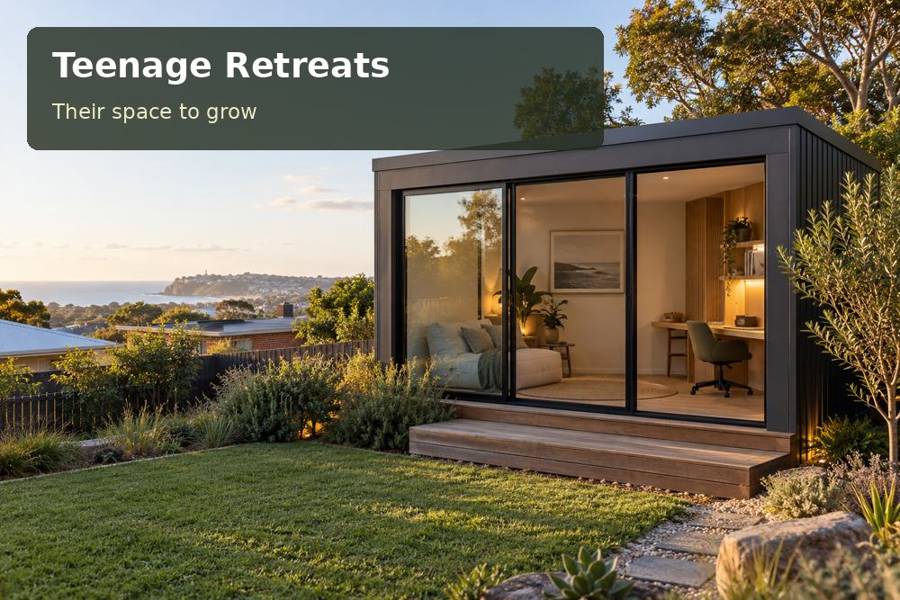
Create a Maitland shared study retreat with separate working areas, understandable belongings storage and circulation that remains useful when both desks are occupied.
Two teenagers sharing a study room may need different resources and working habits. A retreat in Maitland can support them more effectively when each position is complete and their belongings remain identifiable. The design should not assume that one long desk automatically provides comfortable shared use. Begin with the people, the tasks they do and the times they use the room. The aim is an arrangement where one student can start or finish work without dismantling the other's session.
Demonstrate both study setups
Place the actual devices, books and papers used by each student on a trial surface. Include chairs occupied at the same time. A desk that seems generous with closed books can become restrictive when two projects require references spread beside the screens.
Maitland has a Hunter River setting. At the property, assess the retreat's household connection and the views from both working positions. Different window relationships may make one desk much brighter than the other, so privacy and light adjustment should be considered individually.
Separate personal storage from shared resources
Give each student a defined place for ongoing work and everyday belongings. Shared references or supplies can occupy a common compartment. The system should be clear enough that returning a book does not depend on asking whose pile it belongs to.
| Study requirement | Room provision | Simultaneous-use trial |
|---|---|---|
| First workstation | Complete individual surface | Actual references and occupied chair |
| Second workstation | Independent usable position | Equipment and movement without overlap |
| Personal work | Separate identified storage | Project order preserved between sessions |
| Shared resources | Common accessible compartment | Retrieval while both desks are in use |
If students mainly alternate use, describe that instead of designing around a group session that rarely occurs. The room can then prioritise a different balance of individual surface and retained storage. Involve both intended users in the decision.
Let furniture support a realistic reset
A carpenter can coordinate desk supports, compartments and cable access with the measured setups. Discuss book loads and the operation of drawers beside occupied chairs. Avoid storage that requires a student to reach repeatedly across the other person's work.
Choose surfaces for the actual study activities and their care requirements. A simple project folder or tray may preserve unfinished school work better than a decorative display shelf. Define where larger assignments go when they do not fit ordinary book storage.
- Identify current projects separately for each student.
- Keep shared items in a consistent common position.
- Leave the exit route available during simultaneous occupation.
- Agree a clear routine for returning resources after study.
Coordinate services for both positions
Test data needs at the garden location if online work is part of the intended routine. An electrician can plan outlets around the full occupied layout, keeping leads outside chair movement. Task lighting should serve each desk without creating reflections across the other's display.
For New South Wales retreat proposals, describe the activity and occupation accurately to advisers, including whether any sleeping use is proposed. Assess the suitable building arrangement and site scope before ordering. Supports, levels, roof water and delivery access need their own coordinated review.
Comfort controls should remain reachable by both users. Consider ventilation, insulation, shading and any heating or cooling alongside the desks. Retain maintenance access after cabinets are filled, and review how the students reach the room from the main home during ordinary evenings.
Develop the shared study retreat
- Demonstrate both students' normal work and occupation times.
- Trial the two desks with real equipment and occupied chairs.
- Define individual project storage and shared resource positions.
- Coordinate lighting, data, suitable use and site installation.
- Test arrival, simultaneous study and the agreed reset routine.
Explore teenage retreats with the students' actual resources and preferences. A Maitland shared retreat can make homework more orderly when each person has a complete position and the common room remains understandable throughout a busy school week.
