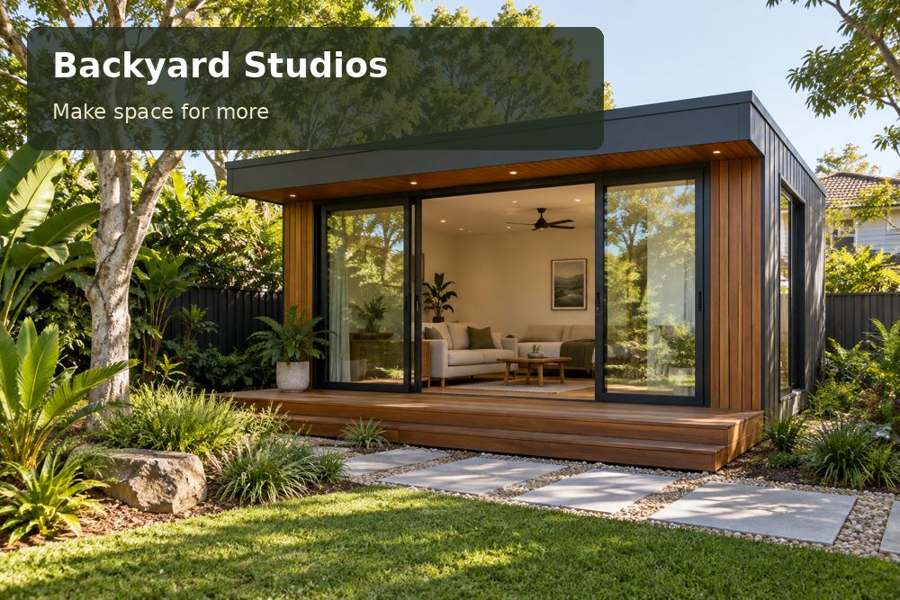
Create a Maleny writing studio with a framed garden outlook, purposeful book storage and an interior designed for sustained attention.
A writing room in Maleny should invite attention without asking the writer to manage a complicated space. A Maleny backyard studio can offer that quiet continuity through a well-positioned desk, organised reference books and a garden outlook that feels intentional. The building does not need elaborate decoration to become compelling. Its value lies in the relationship between the working chair, the light and the short journey that marks the beginning of a writing session.
Frame the landscape thoughtfully
Sunshine Coast Council describes Mary Cairncross Scenic Reserve near Maleny as subtropical rainforest overlooking the Glass House Mountains. That landscape offers an appealing local reference for a room devoted to observation and reflection. A particular backyard may have a much more enclosed outlook, and the design should respond to the planting and land actually present rather than promise a distant view.
Consider what can be seen from a seated position, not only from standing at the doorway. A modest window can frame a meaningful part of the garden while preserving wall space for books. When comparing Queensland studio designs, ask which layout allows the desk to face useful light without placing the writer directly opposite an uncontrolled bright opening.
Give books and papers a deliberate place
Reference collections can quickly dominate a small room. Measure books and files, decide what belongs permanently in the studio and distinguish everyday resources from occasional material. A combination of closed storage and a limited open shelf may help maintain a calm working environment. Discuss shelf support and fixing details with the fit-out team rather than assuming any wall can carry an extensive collection.
The desk needs space for the writer’s actual methods. A laptop-based practice differs from one involving handwritten drafts, maps or multiple reference volumes. Include a surface for papers that must remain open between sessions. A secondary chair can support reading away from the screen, provided it does not block access to storage or the entrance.
Compare three writing settings
| Arrangement | Working benefit | Detail to resolve |
|---|---|---|
| Desk beside a framed window | Balances work and garden awareness | Glare at the screen or page |
| Desk facing a quiet wall | Reduces visual distraction | Comfortable task lighting |
| Desk plus separate reading chair | Supports different stages of writing | Clear circulation around storage |
The best choice depends on the writer. Test the arrangement with furniture dimensions and a simple full-size outline before selecting the building. A generous-looking room can feel busy when books, an occupied chair and open drawers are all included.
Detail a calm, maintainable room
Select finishes for their everyday effect on light, cleaning and touch. A restrained wall colour and neatly resolved joinery can establish a composed atmosphere. Avoid relying on a decorative feature that reduces useful desk or shelf space. Craftsmanship is evident in consistent cabinet gaps, carefully finished corners and openings that feel proportionate to the room.
Environmental design should be based on the actual site and hours of use. Discuss glazing, shade, ventilation and heating or cooling with the relevant professionals. Roof water and site drainage need coordination, especially where access involves a level change. A garden path should feel comfortable while carrying books or a computer, with exterior lighting considered for evening writing sessions.
A useful writing brief includes:
- The normal duration and timing of sessions.
- The dimensions of books, files and desk equipment.
- A preference for an outward or inward-facing desk.
- Reading, revision and paper-storage requirements.
Five stages towards a writing retreat
- Describe your writing routine and identify which materials must remain ready between sessions.
- Photograph the seated outlook from potential positions and measure the route between house and studio.
- Obtain qualified advice on site conditions, planning and building requirements, foundations and service connections.
- Compare furniture layouts, shelving details, light controls and finish samples against the intended routine.
- Request a proposal that identifies the room, fit-out, external access and operating information supplied at completion.
A place to return to the page
A Maleny writing studio should make starting work feel natural, with a considered view and a room that stays organised. Explore backyard studios and request a proposal shaped around your books, desk and writing habits. Quiet detailing and a clear garden connection can create a distinctive space where sustained attention becomes an everyday pleasure.
