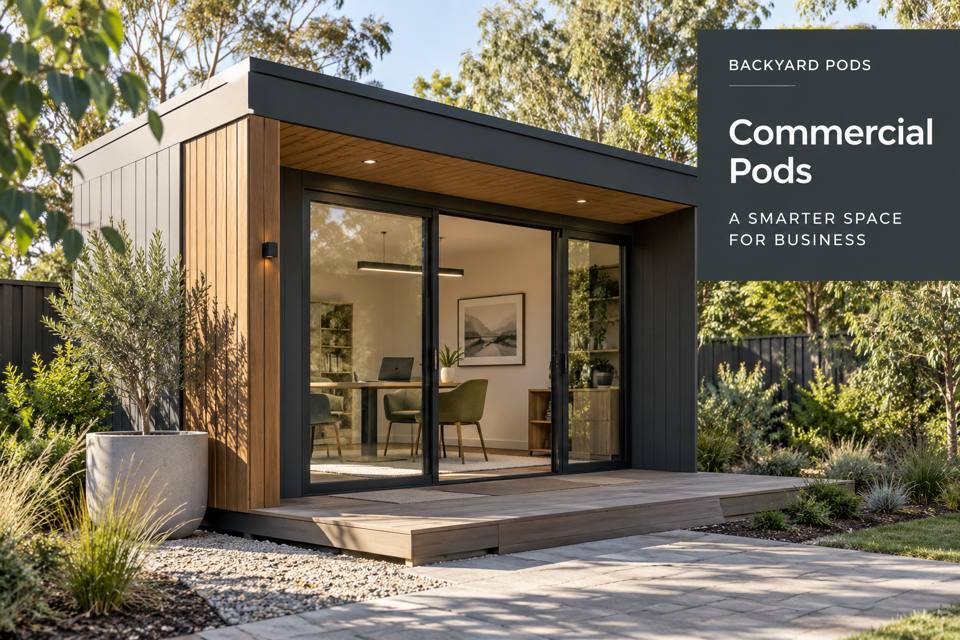
Plan a Melbourne commercial pod for scheduled order collections with labelled staging, clear visitor access and a practical handover surface.
A scheduled order collection can be an efficient customer experience when the location and handover routine are clear. In Melbourne, a commercial pod might provide a focused setting for that activity, subject to advice on the business use and property. The room should identify the customer's order, allow an appropriate check and explain the next action. Begin with the actual products and collection process rather than designing a generic retail interior.
◈ Trace one collection from arrival to departure
Melbourne's laneways and small urban businesses provide a broad local context, while the proposed property has its own access and neighbouring conditions. Map the customer's arrival, any waiting position and the route out with the collected item. Describe appointments, vehicle arrangements and operating hours to qualified advisers. A small building does not automatically establish a suitable customer-access arrangement.
Use a representative packaged order to rehearse the handover. Measure it at the staging position and on the check surface. Note whether two orders could overlap and how identities are distinguished. The customer should not have to navigate through unrelated stock to reach the intended collection point. An edited layout can make the visit straightforward without requiring a large display area.
Make order staging unmistakable
Label staged items according to an appropriate business process, keeping personal information handled responsibly. Separate ready orders from those awaiting completion or review. A plain status system is often sufficient for a small operation. Avoid placing unfinished products beside collection-ready items where the distinction depends on someone remembering an informal arrangement.
Cabinetry or shelving should follow real package dimensions and expected loads. Ask the joiner about support, usable openings and retrieval movement. The handover surface needs room for the actual check, with customer and staff positions shown on the plan. Products with special storage requirements need relevant advice rather than an assumption that an ordinary pod suits every item.
▦ Define the collection workflow
| Stage | Customer value | Space or process |
|---|---|---|
| Arrival | Makes the appointment understandable | Clear route and greeting point |
| Order identification | Presents the correct item | Responsible labels and staging |
| Handover check | Confirms the relevant details | Measured shared surface |
| Departure | Completes the visit smoothly | Carrying route for the package |
Coordinate the room's systems and reset
General lighting should make labels and packaging readable. Review screen reflections if a device is used for records, then coordinate electrical and data installation with qualified professionals. Keep equipment service access clear of staged orders. A short reset routine should restore the handover surface after each appointment without moving unrelated stock across the room.
A Victoria commercial proposal needs advice on the address and exact operation. Include deliveries, customer numbers, storage conditions and any activity beyond collection. Have the building team assess ground levels, drainage, supports and component transport. The quotation should distinguish shell construction, fitted storage, external access and connections so the finished operation is concrete and reviewable.
Useful collection details include:
- Largest ordinary package and how it is carried by customers.
- Clear definitions of ready and incomplete orders.
- Appropriate record handling and identification arrangements.
- The reset process between scheduled appointments.
✓ Prepare an orderly handover room
- Rehearse one genuine collection with a representative packaged item.
- Measure staging, checking and occupied customer positions.
- Trial labels and separation of order statuses.
- Coordinate access, systems and professional business-use assessment.
- Obtain an itemised construction and collection fit-out scope.
Make collection part of the brand experience
Explore commercial pods with scheduled handover as a defined business activity. A Melbourne commercial room becomes persuasive when the customer finds the right order and understands the visit immediately. Measured storage, a clear surface and coordinated installation support a professional experience that is efficient, welcoming and repeatable.
