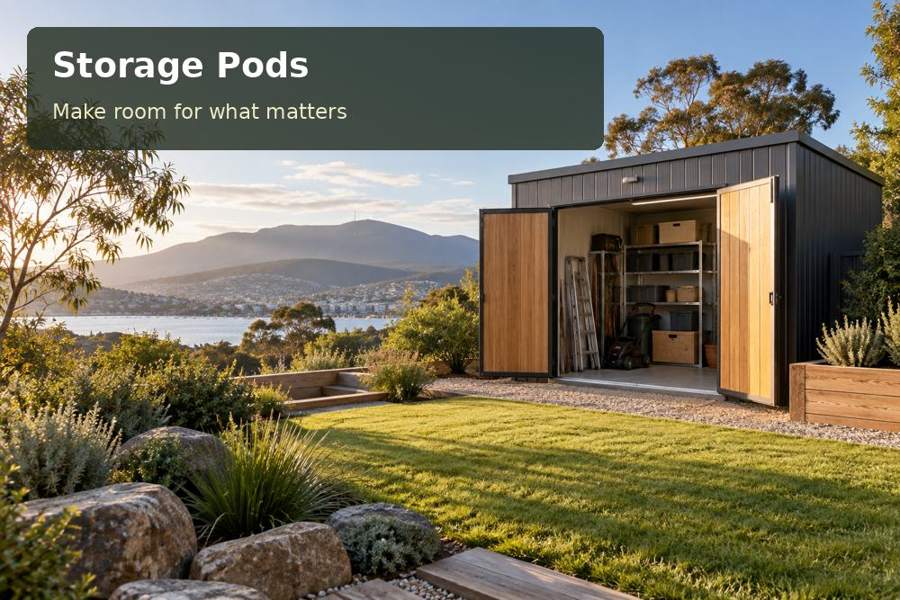
Create a Nelson Bay sports equipment store with accessible daily gear, clearly separated seasonal items and a practical return position for shared accessories.
Sports equipment grows into an awkward collection when every item is stored wherever a gap remains. A pod in Nelson Bay can create a more useful arrangement by grouping equipment according to the way the family retrieves and returns it. Long pieces, bags and small accessories need different storage formats. A successful room makes everyday preparation straightforward while allowing less-used gear to remain identifiable without blocking the entrance.
Design around retrieval frequency
Start with the items used each week. Give those the most convenient positions, then allocate separate space to seasonal or occasional equipment. An alphabetical inventory is useful for records, but the furniture should reflect actual use and the people handling each item.
Nelson Bay's Port Stephens context offers a fitting outdoor background. Within the storage proposal, follow the care requirements of the specific equipment. Salt, grit, water and wear should be considered where they genuinely occur, rather than assuming every object needs the same cleaning or storage treatment.
Match the container to the equipment
A tall bay can hold long items, while shallow drawers may suit small accessories. Large unlabelled tubs can conceal useful pieces and encourage repeated purchasing of items already owned. Measure the collection before choosing a container system.
| Collection | Storage approach | Practical check |
|---|---|---|
| Regularly used bags | Accessible supported position | Lift and return by the intended user |
| Long equipment | Measured vertical or horizontal bay | Full length and retrieval movement |
| Small accessories | Labelled divided storage | Clear identity and complete set |
| Seasonal pieces | Separate retained compartment | Condition check before reuse |
Where several people share equipment, label the return location as clearly as the retrieval location. This reduces reliance on one family member remembering where everything belongs. Keep personal ownership identifiable where it matters.
Give maintenance a defined routine
Identify the destination for equipment needing attention. It may be checked elsewhere, but the storage register should indicate that it is unavailable. Returning a damaged or incomplete set to its normal shelf creates confusion at the next departure.
Discuss rack loading, fixings and supported edges with the installer. Equipment can be light individually but substantial in aggregate. Avoid adding improvised hanging loads to furniture that was specified for another purpose. Cleaning products and specialised items should follow their own instructions and suitable storage arrangements.
- Record incomplete sets before replacing them on a shelf.
- Keep wet returns separate until the appropriate care is completed.
- Place daily equipment within the intended user's comfortable reach.
- Maintain an uncluttered route for bulky bags.
Coordinate the store with the garden
Locate the everyday entrance along the route used to reach the vehicle or outdoor activity. Trial that movement while carrying the largest usual bag. A threshold or narrow turning point can matter more than the pod's total floor area.
For New South Wales storage proposals, describe contents, access and any maintenance activities to the project advisers. Assess support levels and water management for the actual footprint. Record delivery clearances and unloading responsibilities separately from the finished household route.
Lighting should reveal labels and condition without making the room difficult to inspect. Review ventilation and moisture conditions before filling the shelves. Any fittings or service components need to remain accessible after long equipment and storage containers are placed.
Establish the family equipment room
- List regular, seasonal and shared sports equipment separately.
- Measure packed formats and the movement used to retrieve them.
- Assign both a normal return position and an attention-required routine.
- Coordinate racks, lighting, room conditions and site preparation.
- Test a family departure and the complete return process.
Explore storage pods with the actual collection and its usage pattern. A Nelson Bay sports store can reclaim household space while making preparation more dependable, because each piece has a visible identity and a realistic place to return.
