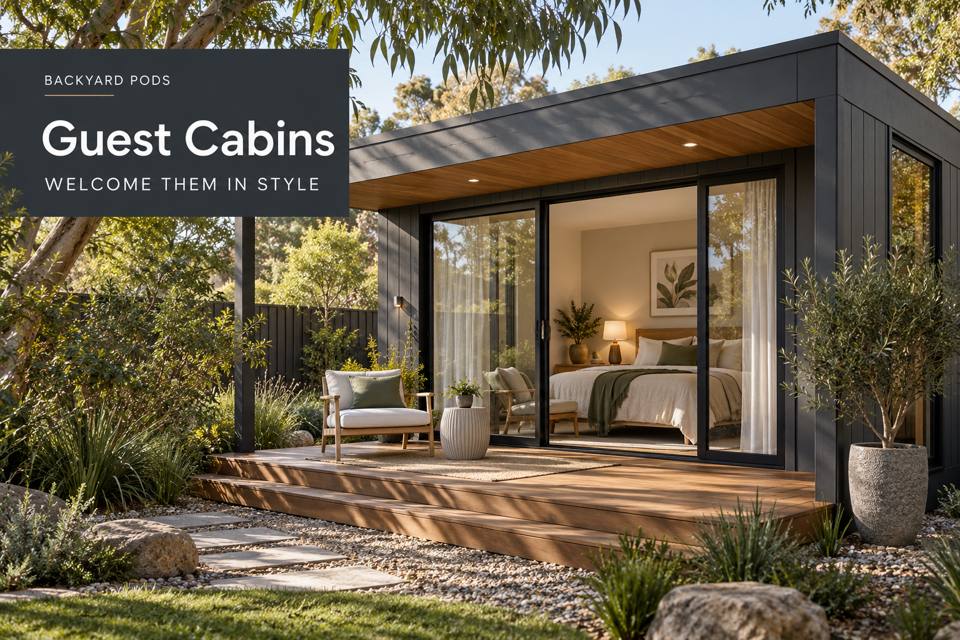
Create a Nowra guest cabin with organised storage for visiting relatives' instruments, cameras and personal hobby equipment.
Some visitors arrive with more than a suitcase. A camera bag, musical instrument or carefully packed hobby kit can change how a guest room needs to work. In Nowra, a cabin planned around those belongings can keep the bed comfortable and the floor clear while giving treasured equipment a sensible temporary home. Begin by asking what your regular visitors bring, then provide storage that matches the objects rather than assuming every stay needs the same furniture.
Understand the visitor's belongings
Record the dimensions of equipment cases and whether they need to lie flat or remain upright. Ask about manufacturer storage guidance and any handling concerns. A generic cupboard may be too shallow for a hard case or inconvenient for an item needed daily. The room should make retrieval straightforward without placing equipment against a window or across a walking route.
Nowra's river scenery, bushland surroundings and cultural attractions offer varied reasons for a family visit. A relative might bring a camera or notes for a creative project, but the cabin should support the belongings you actually expect. Use local interest as context and keep the storage brief grounded in real visitor habits.
Give equipment a defined position
In New South Wales guest-cabin planning, distinguish private hosting from any proposed business activity. Describe the accommodation functions accurately to the project adviser. Then show both personal luggage and hobby equipment on the furniture plan; they should not silently share the same small space unless that arrangement has been tested.
| Belonging | Storage approach | Question to confirm |
|---|---|---|
| Camera or accessory case | Supported shelf or cabinet position | Is retrieval possible without stacking other bags? |
| Instrument case | Dimensioned, stable location | Does the opening direction fit the room? |
| Working notebook or kit | Small accessible surface | Can it be used without occupying the bed? |
Avoid making broad promises about secure or climate-controlled storage unless the specified system supports them. Guests remain responsible for their property, while the building brief can identify reasonable privacy, cupboard operation and comfort requirements. If unusually sensitive equipment is expected, seek appropriate advice rather than improvising a storage claim.
Coordinate furniture with lighting and services
Visitors may need to check photographs, make notes or prepare equipment for the next day. A modest table with useful illumination can support these activities without turning the cabin into a crowded workshop. Measure the chair movement and keep the entrance accessible while the table is occupied. Position outlets through the electrical design, avoiding trailing charging leads across circulation.
Review window coverings and ventilation against both sleeping and storage needs. Observe the proposed site at different times to understand light, garden activity and privacy. Coordinate cooling equipment, condensate disposal and roof water drainage with the installation team. Keep any service access separate from the space assigned to guest belongings.
Ask visitors about:
- The largest cases and how frequently they are opened.
- Equipment instructions relevant to storage or charging.
- The need for a small preparation or note-taking surface.
- Preferred luggage locations and overnight privacy.
Develop a visitor-specific cabin
- Inventory the belongings of the relatives who stay most often.
- Trial the furniture arrangement with equivalent cases and an occupied bed.
- Arrange advice on site suitability, accommodation permissions and the planned facilities.
- Agree cabinet dimensions, electrical positions, lighting and installation access.
- Request a complete proposal and test the storage arrangement before the first visit.
Host with a more useful room
Explore guest cabins with a clear picture of your visitors and their equipment. A Nowra cabin becomes more welcoming when personal possessions have a place that does not compromise rest or circulation. Purposeful cabinetry, a useful small surface and a documented construction scope can support longer family stays with less rearrangement, giving guests room to enjoy both the visit and their own interests.
