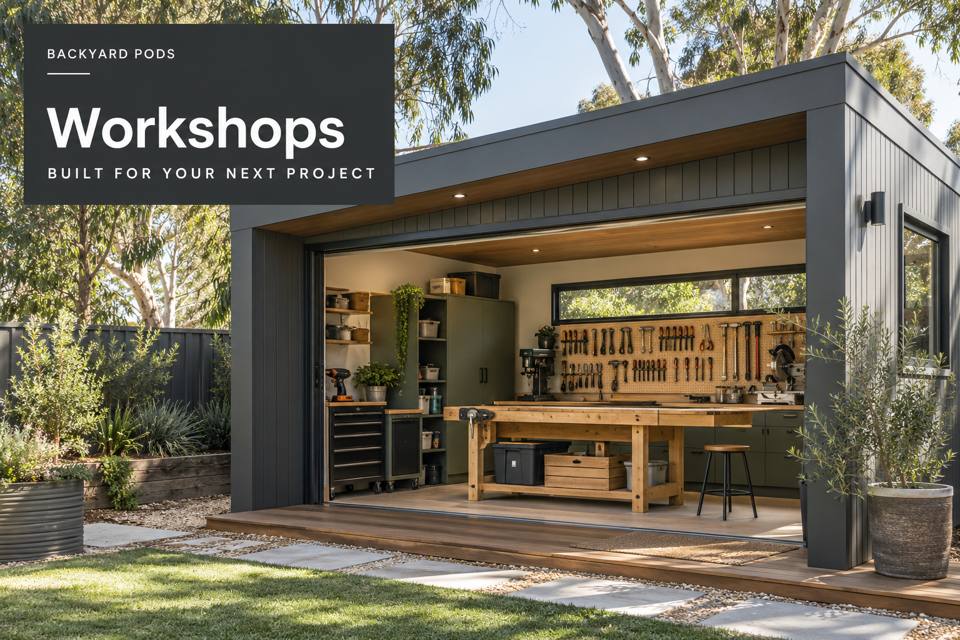
Create a Nowra workshop with a generous pattern surface, orderly templates and storage that supports textile preparation.
Before a textile project reaches a sewing machine, its pattern needs room to develop. A workshop pod in Nowra can provide a clear layout surface where templates, fabric and measurements remain visible. The strongest design begins with the scale of that preparation work. A deep table, sensible storage and an unobstructed route around the active surface can make the room a useful place for planning rather than another cramped corner where material must be folded too soon.
Measure the largest layout
Set out a typical pattern at full size, including the fabric and tools needed around it. Record which edges you approach and whether another person assists. The furniture plan should respond to that occupied arrangement. A large table that cannot be reached comfortably from enough sides may be less useful than a slightly smaller, properly positioned surface.
Nowra's Shoalhaven landscape can influence colours and textile themes, while the workshop position depends on the individual property. Document the approach for bringing materials into the garden and any changes of level along it. The delivery route for the pod and the daily route for fabric are separate questions that both deserve attention.
Store templates by shape and frequency
Within New South Wales workshop proposals, specify the intended preparation activities and any equipment used. Some patterns are best stored flat, while others may be rolled or hung according to their material and condition. Provide dimensions rather than asking for a general craft cupboard. Keep active templates accessible and identify a different position for archived work.
| Preparation item | Storage or surface need | Design question |
|---|---|---|
| Full-size pattern | Clear supported layout | Can all required edges be reached? |
| Reusable template | Appropriate labelled storage | Does the arrangement avoid unnecessary folding? |
| Fabric reserve | Organised material positions | Can selection happen without disturbing active work? |
Compare table finishes against the textiles and tools involved. Ask suppliers about cleaning and suitability for the proposed process. If cutting occurs on the surface, identify the protection and equipment used rather than assuming any attractive tabletop can tolerate it. The carpenter needs the working method as well as the external table dimensions.
Keep the room comfortable for standing work
Pattern preparation may involve longer periods standing and moving around a table. Discuss the working height with the user and design team. Observe daylight at the proposed position and coordinate task illumination to avoid deep shadows across measurements. Adjustable coverings can help manage strong brightness without removing the garden connection entirely.
Electrical outlets and any specialised equipment should be arranged through qualified trade work. Explain products or processes that may need particular ventilation. Coordinate comfort equipment, maintenance access and drainage with the completed furniture layout. A room that looks spacious before installation can become difficult to use if service units occupy the only practical storage wall.
Record the textile brief:
- Maximum pattern dimensions and the required approach to each edge.
- Template materials and recommended storage methods.
- Fabric quantities, tool details and any cutting activities.
- Working heights, session length and lighting preferences.
Plan from material to finished layout
- Arrange a representative textile project at full scale and record the space used.
- Trial table access and distinguish active templates from archived material.
- Seek advice on site conditions, intended workshop use, supports and approvals.
- Coordinate the table construction, storage interiors, lighting and equipment connections.
- Compare complete proposals and test the installed room before filling the cupboards.
Give preparation the space it deserves
Visit workshops with the patterns that define your work. A Nowra workshop can make textile preparation more composed when the table supports the whole layout and templates remain easy to find. Measured furniture and a clear installation scope give that improvement substance, creating a room where the maker can focus on proportion, material and the details of the next project.
