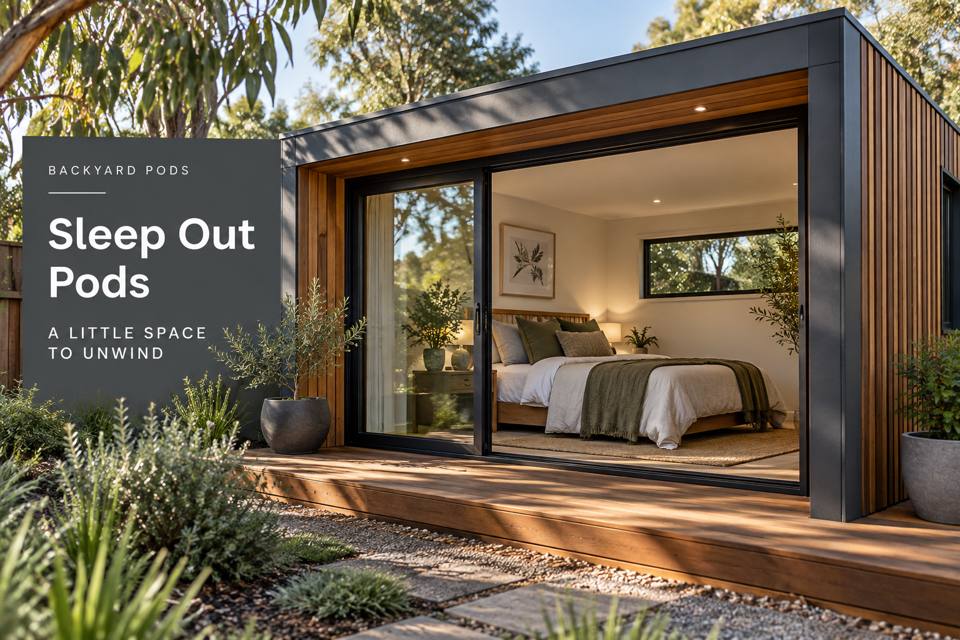
Rockhampton Sleep Out Pods with a Distinct Host and Guest Storage Plan: explore practical layout choices, material and service coordination, and a clear project brief based on the intended use.
◈ Define the purpose before choosing the fitout
A sleep out becomes easier to prepare when host supplies and visitor belongings have different destinations. At a Rockhampton property, heritage-inspired finishes can contribute character, while the storage brief should remain practical. Confirm the intended room use and guest facilities, then count the items needed for both hosting and overnight occupation before selecting cupboards or shelves.
Guest storage based on ordinary overnight belongings
List travel bags, clothing and personal devices for the expected visitors. Draw their positions with the bed and doorway in use. Storage dimensions should reflect the actual stay pattern, keeping the sleeping route available when luggage is unpacked and drawers are open.
Host linen kept in an identified preparation location
Spare bedding and towels need an organised place the host can access during preparation. Distinguish those supplies clearly from guest compartments. Labels should describe contents and the intended replenishment routine, avoiding a cupboard filled with unrecorded items that are difficult to check.
Care information stored alongside the equipment record
Operating instructions and material-care guidance should remain available without occupying guest bedside surfaces. Keep them in an identified host reference position. A concise visitor sheet can explain the relevant controls while the fuller product documents support ongoing room maintenance.
The final fitout tested with every compartment active
Show cupboard openings, occupied furniture and the arrival bag together. This can reveal conflicts hidden in an empty-room drawing. If the fitout changes during fabrication, revisit the arrangement rather than assuming the original circulation remains unaffected by a larger cabinet or different hinge position.
▦ Compare the details that matter
| Design decision | Information to request | Intended result |
|---|---|---|
| Guest storage based on ordinary overnight belongings | A guest-belongings inventory with open-luggage and storage-front clearances shown on the layout | Visitors using their allocated storage without obstructing the principal sleeping route |
| Host linen kept in an identified preparation location | A labelled host-linen position linked to the actual preparation and replenishment sequence | The host locating ordinary supplies without searching storage assigned to visitors |
| Care information stored alongside the equipment record | Separate host product records and a concise guest instruction sheet for included equipment | Room information remaining available in forms appropriate to host maintenance and visitor use |
| The final fitout tested with every compartment active | A final occupied fitout review including all opening storage fronts and the normal luggage position | The installed organisation being assessed through the room's actual simultaneous activities |
When comparing sleep-out pods in Rockhampton, bring information about guest storage based on ordinary overnight belongings to the consultation. For an address in Queensland, confirm the relevant site and use requirements with appropriate professionals. Review the final fitout tested with every compartment active within the same coordinated proposal.
Practical priorities for the quotation
- Request a guest-belongings inventory with open-luggage and storage-front clearances shown on the layout; clarify the responsible contributor.
- Document a labelled host-linen position linked to the actual preparation and replenishment sequence; clarify the responsible contributor.
- Retain separate host product records and a concise guest instruction sheet for included equipment; clarify the responsible contributor.
- Include a final occupied fitout review including all opening storage fronts and the normal luggage position; clarify the responsible contributor.
✓ Develop the proposal in five steps
- Review guest storage based on ordinary overnight belongings with the provider. Ask how the proposal supports visitors using their allocated storage without obstructing the principal sleeping route.
- Review host linen kept in an identified preparation location with the provider. Ask how the proposal supports the host locating ordinary supplies without searching storage assigned to visitors.
- Review care information stored alongside the equipment record with the provider. Ask how the proposal supports room information remaining available in forms appropriate to host maintenance and visitor use.
- Review the final fitout tested with every compartment active with the provider. Ask how the proposal supports the installed organisation being assessed through the room's actual simultaneous activities.
- Confirm the coordinated scope, with a final occupied fitout review including all opening storage fronts and the normal luggage position, before manufacture or installation is committed.
Summary: a room with a documented purpose
Rockhampton Sleep Out Pods with a Distinct Host and Guest Storage Plan benefits from decisions tied to actual users and property conditions. Start with visitors using their allocated storage without obstructing the principal sleeping route. Coordinate this with the host locating ordinary supplies without searching storage assigned to visitors. The supporting brief should also address room information remaining available in forms appropriate to host maintenance and visitor use. At the final review, confirm the provisions for the installed organisation being assessed through the room's actual simultaneous activities. Use the drawings, product information and itemised scope as the agreed project reference.
