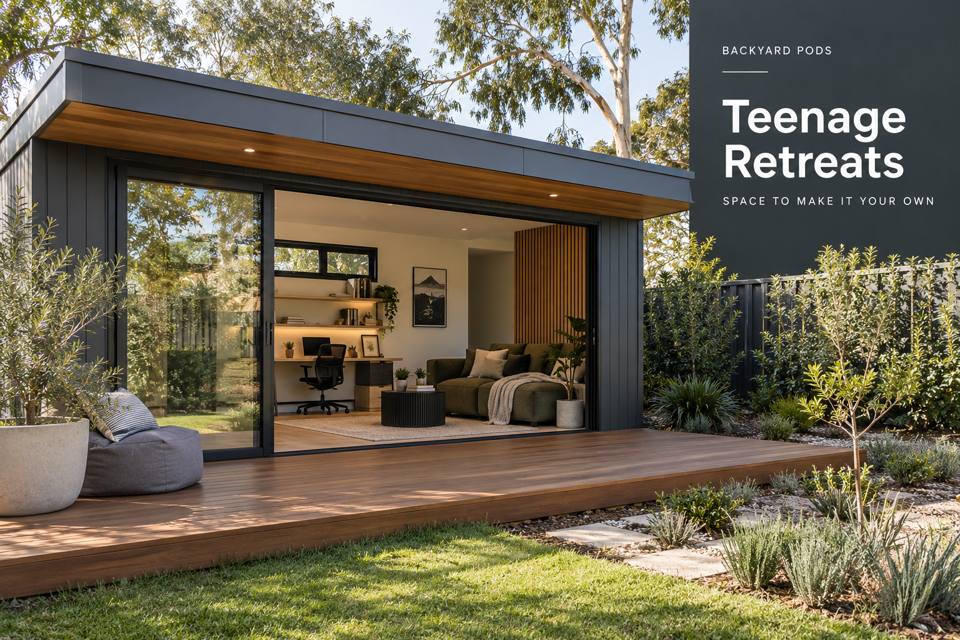
Rockhampton Teenage Retreats with a Practical Music Reference and Study Zone: explore practical layout choices, material and service coordination, and a clear project brief based on the intended use.
◈ Define the purpose before choosing the fitout
A teenager interested in music may need a room for reading scores, reviewing recordings and completing schoolwork. At a Rockhampton property, heritage references can inform the room's appearance, while the brief should explain the activities honestly. Do not assume a pod provides sound isolation. Any acoustic objectives need appropriate assessment alongside the household's agreed use and equipment arrangements.
Music references given a position beside school materials
Scores, notebooks and ordinary listening equipment should be inventoried separately. Decide which items need the desk at the same time. This prevents the fitout becoming a generic technology corner that leaves no room for written work or a current school assignment.
Equipment services arranged through qualified advice
List devices and their power requirements before the electrical scope is prepared. Charging and cable positions should follow the planned furniture arrangement. Avoid loose equipment expanding into the doorway as the collection grows; retain identified positions for the ordinary devices genuinely used.
Acoustic expectations stated as a separate project objective
Describe the actual activities and the household's concerns about sound. Ask an appropriate specialist what assessment or treatment is relevant. A decorative wall finish or detached location cannot be presented as proof of isolation, and any proposed measures need documented expectations and limitations.
A tidy reset supporting the room's next activity
Give devices, reference material and project notes clear return locations. The teenager should participate in choosing the system. A simple end-of-session checklist can preserve the main work surface, with current school tasks identifiable when the room changes from music review to study.
▦ Compare the details that matter
| Design decision | Information to request | Intended result |
|---|---|---|
| Music references given a position beside school materials | A combined music-reference and schoolwork inventory mapped to actual simultaneous desk use | The teenager accessing both interests through an organised and measured study arrangement |
| Equipment services arranged through qualified advice | A professionally coordinated device and electrical plan with defined equipment parking and cable positions | The room's equipment remaining organised within the intended furniture and circulation layout |
| Acoustic expectations stated as a separate project objective | An explicit acoustic brief assessed by an appropriate specialist with documented treatment limitations | Sound-related decisions being grounded in professional assessment of the actual intended activities |
| A tidy reset supporting the room's next activity | User-chosen return positions and a reset checklist distinguishing current schoolwork from other references | The retreat returning to a useful study arrangement after its other agreed activities |
When comparing teenage retreats in Rockhampton, bring information about music references given a position beside school materials to the consultation. For an address in Queensland, confirm the relevant site and use requirements with appropriate professionals. Review a tidy reset supporting the room's next activity within the same coordinated proposal.
Practical priorities for the quotation
- Request a combined music-reference and schoolwork inventory mapped to actual simultaneous desk use; clarify the responsible contributor.
- Document a professionally coordinated device and electrical plan with defined equipment parking and cable positions; clarify the responsible contributor.
- Retain an explicit acoustic brief assessed by an appropriate specialist with documented treatment limitations; clarify the responsible contributor.
- Include user-chosen return positions and a reset checklist distinguishing current schoolwork from other references; clarify the responsible contributor.
✓ Develop the proposal in five steps
- Review music references given a position beside school materials with the provider. Ask how the proposal supports the teenager accessing both interests through an organised and measured study arrangement.
- Review equipment services arranged through qualified advice with the provider. Ask how the proposal supports the room's equipment remaining organised within the intended furniture and circulation layout.
- Review acoustic expectations stated as a separate project objective with the provider. Ask how the proposal supports sound-related decisions being grounded in professional assessment of the actual intended activities.
- Review a tidy reset supporting the room's next activity with the provider. Ask how the proposal supports the retreat returning to a useful study arrangement after its other agreed activities.
- Confirm the coordinated scope, with user-chosen return positions and a reset checklist distinguishing current schoolwork from other references, before manufacture or installation is committed.
Summary: a room with a documented purpose
Rockhampton Teenage Retreats with a Practical Music Reference and Study Zone benefits from decisions tied to actual users and property conditions. Start with the teenager accessing both interests through an organised and measured study arrangement. Coordinate this with the room's equipment remaining organised within the intended furniture and circulation layout. The supporting brief should also address sound-related decisions being grounded in professional assessment of the actual intended activities. At the final review, confirm the provisions for the retreat returning to a useful study arrangement after its other agreed activities. Use the drawings, product information and itemised scope as the agreed project reference.
