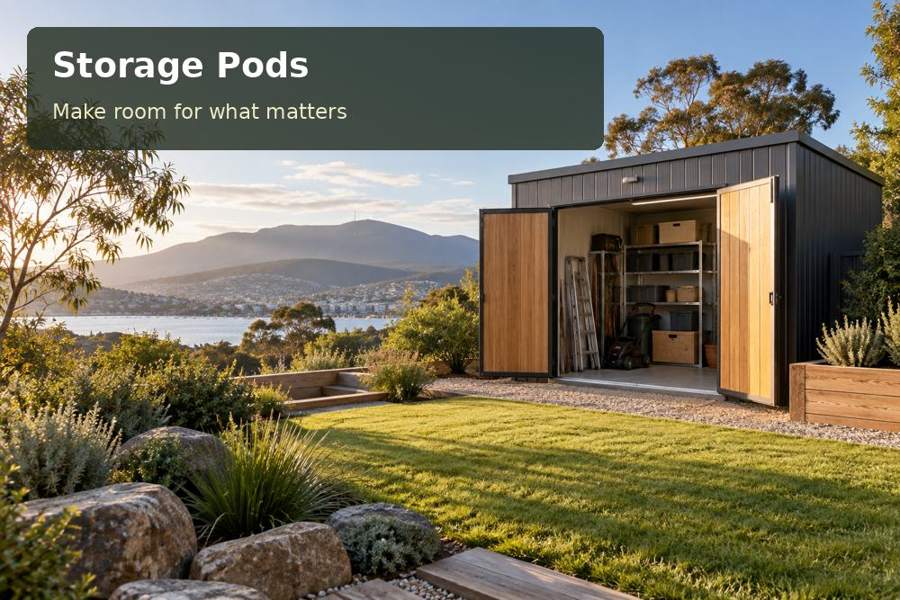
Study materials can outgrow household shelving long after their immediate use has passed. In Armidale, a pod may provide ordinary storage for suitable reference sets while keeping active resources separate from material awaiting review. Explore storage pods with an honest assessment of paper-based contents, because additional space alone does not establish preservation conditions.
Study materials can outgrow household shelving long after their immediate use has passed. In Armidale, a pod may provide ordinary storage for suitable reference sets while keeping active resources separate from material awaiting review. Explore storage pods with an honest assessment of paper-based contents, because additional space alone does not establish preservation conditions.
Distinguish access from preservation
List the materials that are genuinely useful, the ones that can be replaced and those with significant personal or archival value. Important documents, rare books and artworks may require specialist storage rather than a general backyard enclosure. Ask suitable advisers to establish the required conditions before making a building decision. Avoid describing insulation or a lined interior as proof of archival suitability.
For suitable ordinary contents, a register can identify subject, container and review date. This makes it possible to locate a complete reference set without opening every box. Keep a clear surface for examining material and deciding what should return to the house. The room should support selection, not encourage indefinite retention of everything ever used.
Understand the Armidale setting
Destination NSW describes Armidale through its New England High Country setting, leafy streets, crisp winters and autumn foliage. These features give useful context for a considered design discussion. The actual property still needs assessment of orientation, ground, exposure and lawful drainage. A pleasing garden outlook does not determine the room’s environmental performance.
Discuss how often the owner will visit and whether the proposed use involves only retrieval or also extended reading. Different activities can change the design and service questions. The entrance route should remain convenient, and any seating or review surface must not consume the clear access needed to shelves.
Give the collection a legible map
| Material status | Layout implication | Question before storage |
|---|---|---|
| Active ordinary reference | Convenient, labelled position | How often is it consulted? |
| Retained occasional set | Assigned container and register entry | Is its continuing purpose clear? |
| Valuable or sensitive material | Specialist suitability review | Does this enclosure meet its needs? |
Shelving must reflect the weight of the contents, not just the number of visible boxes. Have the supporting arrangements assessed and avoid assuming generic wall fixings are adequate. Container depth and spacing should permit comfortable handling. A smaller accessible collection can be more useful than impressive nominal capacity blocked by packed stacks.
Coordinate services with a defined brief
Lighting for labels and examination should be reviewed at the intended surface. If electrical work is included, use appropriately licensed designers and installers. Any heating, cooling or ventilation provisions belong within a professional assessment of the envelope and use, with claims limited to documented features.
The project team should investigate relevant New South Wales requirements for the building, address and proposed activity. Supports and entrance levels require site-specific design. Roof-water disposal and external inspection access should appear in the drawings, with maintenance information supplied for the chosen materials.
Before fabrication, provide the transport team with current gate measurements, driveway turns and overhead obstructions. Name the contractors responsible for site preparation, placement and final connections. Keep a record of exclusions so the chosen quotation reflects the complete project rather than only a finished shell.
- Use review dates to prevent obsolete material becoming permanent stock.
- Keep significant documents outside ordinary storage until suitability is established.
- Label the face visible from the main retrieval aisle.
- Reserve a place to examine one container without disturbing others.
Develop the reference-store plan
- Classify the collection by continuing use and preservation requirements.
- Obtain advice on sensitive materials and identify the suitable ordinary inventory.
- Measure containers and prepare a load-aware shelf map with a review surface.
- Confirm the professional building assessment, relevant requirements and installation sequence.
- Establish the register at handover and schedule the first collection review.
Summary and next enquiry
An Armidale reference store can help a household make informed use of its retained study materials. Request a proposal supported by the classified inventory, measured containers and assessed site. A clear account of storage limits, accessibility and maintenance provides a stronger basis for choosing the room than an unsupported promise of protection.
