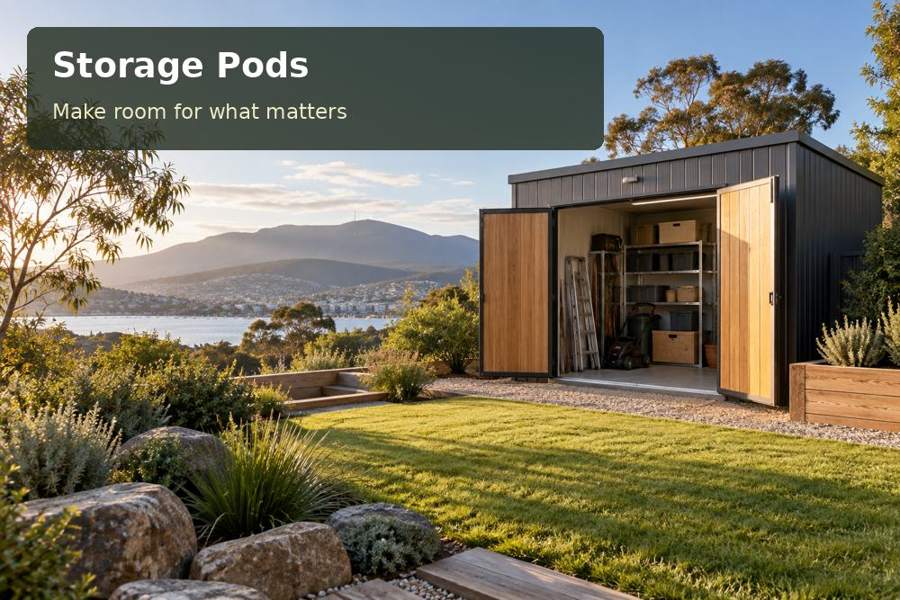
Creative households often retain robust props, presentation boards and reusable objects between projects. A storage pod in Lismore can bring that collection into view through numbered bays and a clear record of dimensions. Consider storage pods as a prop library with defined limits: useful organisation begins when the owner knows what each item supports and how it can be retrieved.
Creative households often retain robust props, presentation boards and reusable objects between projects. A storage pod in Lismore can bring that collection into view through numbered bays and a clear record of dimensions. Consider storage pods as a prop library with defined limits: useful organisation begins when the owner knows what each item supports and how it can be retrieved.
Make the creative inventory visible
Photograph each suitable prop and give it an identifying code. The record should include its dimensions, material and any handling concerns. Objects awaiting repair or identification belong in a separate review position, not among the ready collection. Unknown chemicals, damaged electrical equipment and other hazardous items require qualified advice and should not be treated as ordinary props.
Avoid keeping everything because a future use is imaginable. Nominate a review period and ask which projects the collection actually supports. A measured selection can leave space for new work without turning the pod into an inaccessible archive of previous activity. Sensitive art materials or valuable works may need specialist facilities.
Respond to Lismore’s setting responsibly
Destination NSW describes Lismore on the Wilsons River and highlights its arts community within the Northern Rivers. That creative context makes a prop library a plausible household use, but it does not establish the suitability of a particular site. Have local ground, drainage and relevant hazard information assessed by qualified people and the responsible authorities.
Compare potential locations with the household’s actual carrying route. Large boards and light but awkward shapes may need substantial turning space. Preserve access to retained planting and maintenance points, and consider neighbour-facing appearance. If the use extends to business activity or regular collections by other people, declare that scope before design and approval questions are resolved.
Plan retrieval by shape
| Prop format | Bay arrangement to discuss | Useful inventory detail |
|---|---|---|
| Flat presentation boards | Supported measured position | Width, height and surface sensitivity |
| Small reusable objects | Labelled compatible containers | Complete set and material |
| Irregular bulky shapes | Defined accessible floor bay | Turning and handling space |
Supports and restraints should suit the objects, with professional advice where their loads or stability require it. Ask the supplier to show the real collection on the internal drawing. A door that appears generous on an empty plan may be awkward when an oversized shape is carried through it.
Resolve the building as a complete project
Discuss documented suitability of cladding, openings and floor finishes for the assessed address and intended storage. The envelope needs coordinated junctions and lawful roof-water disposal. Do not infer environmental protection from an attractive interior lining. Any lighting and electrical services should be specified and installed by the appropriately licensed professionals.
Investigate relevant New South Wales provisions using the actual use description and property information. Professional support design should precede assumptions about slabs, piers or ground alteration. The proposal needs identified responsibilities for those investigations, site preparation and completed connections.
For transport, supply current clearances and photographs of the approach, including any overhead restriction. Ask the provider to confirm placement feasibility and the working zone required around the module. Keep that corridor free until installation is complete and clarify any agreed reinstatement of existing surfaces.
- Photograph borrowed or moved props before updating their location record.
- Keep ready objects separate from pieces needing attention.
- Preserve one clear bay for reviewing an awkward item.
- Remove props with no continuing purpose during scheduled inventory checks.
Five steps towards a creative collection room
- Photograph and classify the props that genuinely support current household projects.
- Assess material sensitivity, safe handling and any hazardous or specialist exclusions.
- Plot the measured shapes within supported bays and a workable doorway route.
- Obtain the site review and written building scope with complete placement responsibilities.
- Start the location register during move-in and agree the first creative inventory review.
Summary and proposal discussion
A Lismore prop-library pod can make creative equipment easier to recognise and use. Seek a design built around the actual shapes and a carefully assessed site. Transparent storage boundaries, an inspectable layout and a documented installation program can give the collection a practical home without making unsupported claims about every possible creative material.
