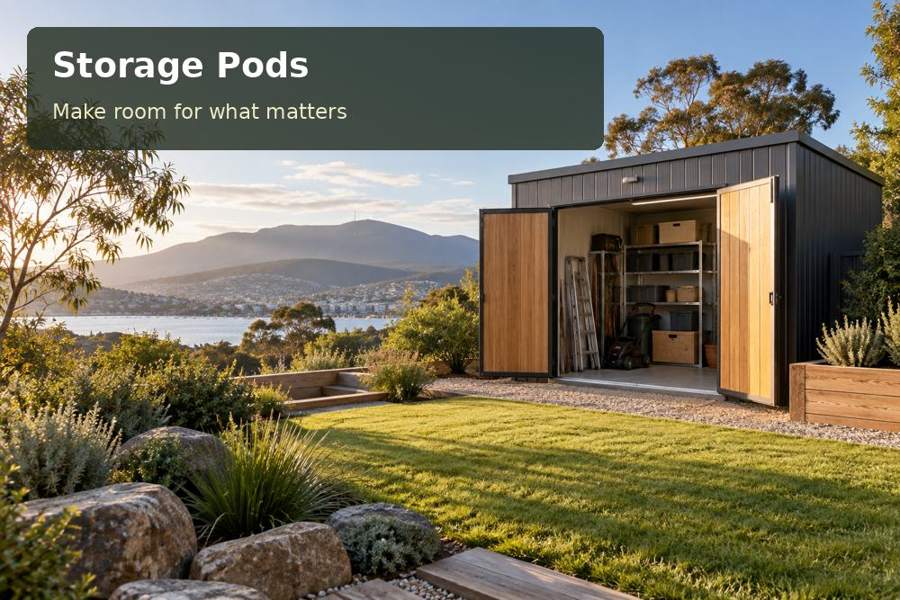
Ordinary household records deserve clear organisation and an honest discussion of preservation requirements. Seek an everyday-records storage proposal grounded in the materials actually held.
Ordinary household records deserve clear organisation and an honest discussion of preservation requirements. At Mount Gambier, plan household archive with appropriate boundaries around the property’s measured conditions and the way the household uses its equipment. The storage pods brief should establish usable space before optional features are chosen.
A layout grounded in the site
Mount Gambier’s official visitor information highlights volcanoes, sinkholes, caves and crater lakes as central to its landscape. These features make site-specific ground investigation especially important as a principle, without implying that every property has the same subsurface conditions. A designer should work from evidence about the chosen address. Record levels, existing paths and drainage before deciding on the pod position. A restrained building can complement the garden while remaining honest about its purpose, with durable details and a sensible maintenance route taking priority over decorative references to the wider landscape. Setting reference: Mount Gambier visitor landscape.
Household archive with appropriate boundaries
A Mount Gambier storage pod may bring everyday household records, boxed decorations and spare furnishings into an orderly inventory. First distinguish ordinary storage from archival requirements: significant documents, artworks or heirlooms may need specialist environmental conditions. Label cartons and keep them accessible for periodic inspection. Avoid placing every container directly against a wall, and allow a sorting surface for reviewing what should remain. A clear record of contents can reduce the uncertainty that makes storage feel unmanageable. The pod proposal should describe its actual specification rather than promise museum-style protection.
Resolve materials and everyday operation
Treat the word “archive” carefully when discussing household records. First determine which materials need ordinary organisation and which require specialist preservation conditions. A storage pod can provide labelled, accessible capacity, but the building should be described according to its actual environmental specification. Important documents or heirlooms may need a different solution.
For appropriate everyday contents, combine numbered boxes with a simple shelf register. Provide a table or clear surface for inspecting paperwork and a defined route between that surface and the door. Avoid locating containers where they obstruct maintenance points. The designer should confirm shelf supports, floor loads and any proposed electrical provisions from the actual plan.
Ground conditions are a project question for qualified professionals, especially when a regional landscape description cannot establish an individual site’s subsurface character. Confirm required investigations before the support system is selected. Coordinate those decisions with the transport provider’s placement requirements. After installation, a periodic review of the register can identify redundant contents and packaging that needs attention, keeping the store legible rather than allowing its history to become another unmanageable collection.
Compare the specific priorities
| Room priority | Arrangement to assess | Decision support |
|---|---|---|
| Document-review surface | Separate everyday records from preservation-sensitive possessions | A measured inventory or task record |
| Numbered carton register | Establish which items require specialist environmental conditions | A scaled movement and furniture drawing |
| Preservation suitability | Draw a clear path between shelves and review surface | Written suitability advice where required |
Items for the project review
- Establish which items require specialist environmental conditions.
- Confirm site investigations before supports are selected.
- Revisit the carton register and packaging periodically.
Before the design is settled, ask the project team which South Australia requirements and property-specific approvals need to be addressed.
Five steps for a reviewable proposal
- Establish the brief: separate everyday records from preservation-sensitive possessions. Retain this information after handover.
- Test the layout: establish which items require specialist environmental conditions. Use dimensions from the actual property.
- Set the specification: draw a clear path between shelves and review surface. Keep the intended users involved.
- Coordinate the site: confirm site investigations before supports are selected. Record the conclusion in the proposal.
- Review everyday operation: revisit the carton register and packaging periodically. Name the party responsible for completion.
Summary and proposal
Seek an everyday-records storage proposal grounded in the materials actually held. Clear boundaries around archival suitability help the owner compare ordinary accessible storage with specialist options where those are needed.
