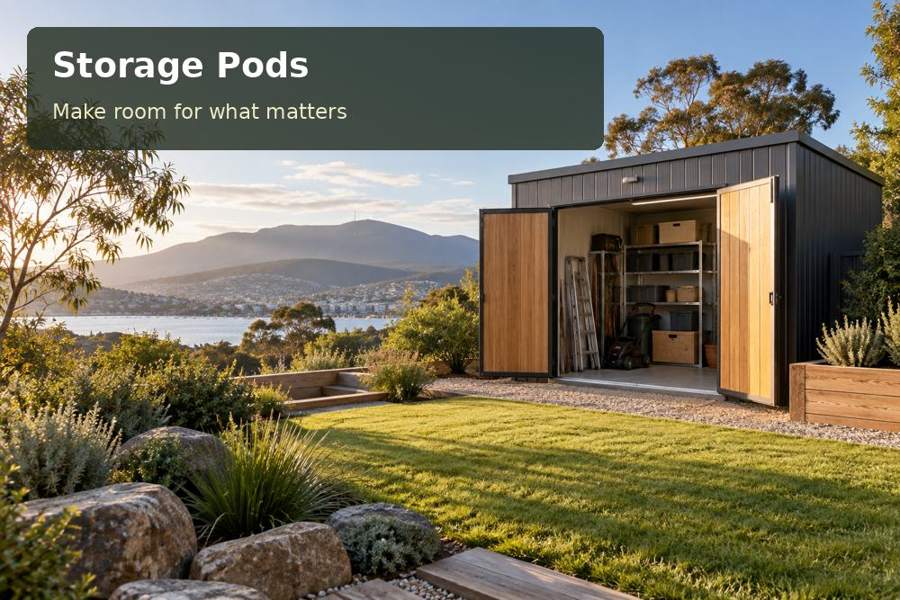
Tools and household accessories often have several users but no agreed return location. A storage pod in Orange can become a small equipment library, with clear bays, a borrowing record and room to check an item before use. Explore storage pods through shared responsibility rather than simply adding shelving: a good system should remain understandable when the usual organiser is absent.
Tools and household accessories often have several users but no agreed return location. A storage pod in Orange can become a small equipment library, with clear bays, a borrowing record and room to check an item before use. Explore storage pods through shared responsibility rather than simply adding shelving: a good system should remain understandable when the usual organiser is absent.
Design for several people
List the ordinary equipment used across the household and note who needs access. A folding ladder, robust measuring tools or reusable decorating accessories can each require a different bay. Confirm appropriate handling and support for awkward objects, and obtain qualified advice where equipment or materials present hazards. The building’s inventory should be a considered selection, not an unchecked collection of everything occasionally borrowed.
A simple return routine is useful. Provide a location for inspected, ready-to-use items and another for objects needing attention. Labels can explain whether an item is available without relying on memory or informal messages. This is particularly valuable when several people prepare for different tasks on the same weekend.
Respond to the Orange property
Destination NSW identifies Mount Canobolas near Orange as a dormant volcanic landscape with a cool-climate setting. That regional description is context, not a substitute for investigations at the proposed address. Review levels, drainage and access with the project team, then consider how the pod relates to existing planting and the house.
A shared store should be reachable by the users it serves. Discuss their movement requirements before choosing the entrance position or adding a deck. External steps and landings affect access and need appropriate design. A location selected only for concealment behind planting may create a difficult carrying route or obstruct exterior maintenance.
Make availability visible
| Equipment group | Useful storage feature | Shared-use check |
|---|---|---|
| Frequently borrowed accessories | Clearly labelled reachable bays | Is the complete set present? |
| Long or bulky objects | Measured position with appropriate support | Can the intended user handle it safely? |
| Items awaiting attention | Distinct review location | Has its condition been assessed? |
A lending record can be as straightforward as a board with the item name and current user. Keep that board beside the checking surface, where it will be seen during retrieval and return. Do not place it where it competes with electrical controls or obstructs the doorway. The internal plan should show the opening door, users and stored equipment together.
Coordinate fabric, light and installation
Choose wall and floor finishes through documented suitability for the intended contents and the site. Ask the supplier which attachments the wall assembly can accept and how shelf loads should be supported. General lighting should illuminate labels and the route, while any electrical installation belongs with appropriately licensed professionals.
Relevant requirements in New South Wales must be investigated for the property and use. Foundations, roof-water connections and finished entrance levels should be settled by the responsible qualified team. Record those decisions in the proposal alongside the joinery or freestanding storage arrangements.
Measure the route from the public road to the placement zone before selecting a module format. The transport provider should assess the delivery method from verified information, including overhead obstructions. Clarify who protects existing surfaces and who completes any agreed reinstatement. A complete scope makes comparison between proposals meaningful.
- Write labels that another user can interpret without explanation.
- Keep the attention-required bay separate from available equipment.
- Leave space for checking a complete kit before borrowing it.
- Review borrowing habits before purchasing additional accessories.
Five actions for a usable equipment library
- Record the ordinary shared items and the people who regularly retrieve them.
- Establish suitability, handling requirements and any specialist advice needed for the inventory.
- Map reachable storage, the checking surface and the route from the house.
- Confirm the assessed site, materials and complete installation responsibilities with the project team.
- Introduce the return record and test the arrangement with more than one household member.
Summary and design request
An Orange equipment-library pod can make shared belongings easier to find and more accountable. Ask for a proposal based on the users, measured items and agreed return routine. A clearly organised interior supported by a verified site and realistic specification provides a stronger result than extra space without an operating plan.
