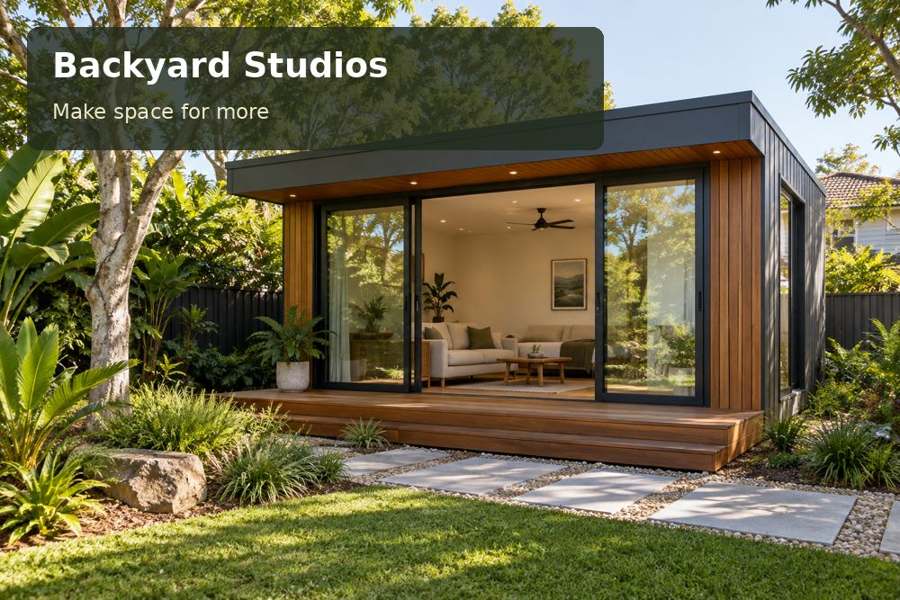
Give bookbinding in Sydney a permanent garden setting with pressing space, paper organisation and a practical sequence from folding to finishing.
A hand-bound volume brings many small operations together, and a dedicated studio in Sydney gives each of them a reliable home. Paper can be folded, covers prepared and unfinished books left safely between sessions. For a Sydney backyard studio, begin with the bookbinding sequence rather than an empty-room illustration. A room designed around making small, precise objects can provide exceptional creative value without requiring a large footprint or an elaborate decorative scheme.
A compact practice in a harbour city
Destination NSW presents Sydney through its harbour, beaches and historic buildings. Those varied references offer possibilities for a book artist's subject matter, but the building itself should respond to the particular backyard. A harbour identity does not establish a water view, exposure or soil condition. Record the existing garden surfaces, mature planting and the space available to reach a separate creative room.
Within New South Wales studio possibilities, a narrow plan can work particularly well when the binding process follows a long bench. Reserve enough depth for the maker to sit, open drawers and move around tools. Think of the garden entrance as the start of that process: a comfortable threshold makes it easier to carry paper boxes inside without resting them on a damp or dirty surface.
Establish a sequence along the bench
Separate paper preparation from adhesive work and final inspection. The distinction can be achieved through bench organisation rather than separate rooms. Keep a clean area available for folded sheets, with trays or drawers for projects awaiting their next stage. Specify the size of the largest book and any pressing equipment before the furniture is designed.
Presses and other equipment need appropriate support and installation advice for their actual weight and operation. Describe products used and seek suitable guidance on handling, cleaning and ventilation where required. A creative studio is a setting to tailor; its label alone does not confirm suitability for every process. Accurate equipment information gives the designer and trades a clear brief.
Compare the binding stations
| Station | Useful function | Dimension to check |
|---|---|---|
| Folding and gathering surface | Keeps clean sheets together | Largest unfolded paper format |
| Cover-making bench | Organises active tools and materials | Reach and cleaning space |
| Finishing shelf or press bay | Holds work between stages | Supported equipment and project size |
Place frequently used supplies within easy reach while retaining a clear central surface. A drawer that fits paper precisely may provide more value than a broad cabinet filled with unsorted boxes. Discuss labels and dividers as part of the fit-out rather than leaving organisation entirely until move-in.
Make fine detail comfortable to see
Bookbinding involves close inspection of edges, folds and alignment. Adjustable task lighting should complement general room illumination, with fixtures arranged so hands do not continually cast shadows over the work. Trial representative paper beneath a proposed light source. Window placement can contribute useful daylight while preserving a long wall for the bench and storage.
Review cladding, door and roof details with the same attention to precision. The garden building should have a defined drainage approach and maintenance access. Ground preparation and supports require advice appropriate to the address and proposed structure. Coordinate electricity and any additional services with qualified trades before the bench position is fixed, so connections remain convenient and accessible.
A productive binding brief records:
- Paper sizes, book formats and typical project quantities.
- Press dimensions and operating requirements.
- Clean storage for completed and unfinished volumes.
- The products and cleaning methods used in the practice.
Prepare the studio in five deliberate stages
- Follow a representative book through every operation, noting where it rests and which tools accompany each stage.
- Measure the bench, equipment and paper boxes, then draw an occupied layout with storage open.
- Arrange an address-specific review of site conditions, approvals, supports, access and the required trade connections.
- Assess lighting, worktop samples and cabinet divisions using the materials you actually handle.
- Obtain a proposal specifying the shell, fitted work areas, installation tasks and care information supplied at completion.
A garden home for carefully made volumes
A Sydney binding studio can turn a compact room into an ordered place for lasting creative work. Visit backyard studios and request a proposal based on your paper formats and making sequence. Precise storage, clear surfaces and purposeful light give each new book room to develop from loose sheets into a finished object.
