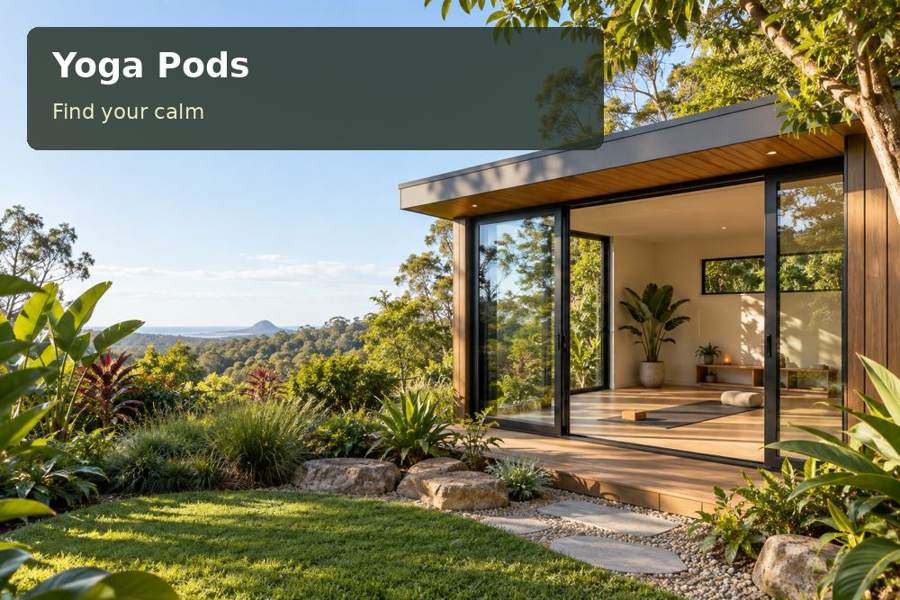
Create a Taree yoga room that combines clear movement space with a separate reading position and accessible storage for a modest practice library.
A personal yoga room can support reflection as well as movement. A pod in Taree may include a small reference library for reading about a chosen practice, recording observations or planning a session. The books should complement the clear floor area rather than gradually replace it. Begin by distinguishing the space used for movement from the position used for reading, then connect the two through a simple storage and lighting arrangement.
Keep the mat area complete
Lay out the mat and the movements the intended user ordinarily performs. Include props where they are actually used and leave the exit route unobstructed. A room may appear spacious with a rolled mat in the corner yet become restrictive once a chair and shelf are added.
Taree's Manning River setting offers a local connection to outdoors. At the site, check the view from both standing and seated positions. A garden-facing window can be enjoyable, but coverings may be useful where privacy or changing sunlight affects the session.
Give reading a distinct position
A small chair or supported reading surface can offer a deliberate transition after practice. Test it with an open book, not simply as a decorative object. The position should not require the user to move furniture across the mat area each time they switch activities.
| Room function | Practical provision | Arrangement to trial |
|---|---|---|
| Movement | Clear measured floor | Mat, normal movements and selected props |
| Reading | Supported seated position | Open reference book and reachable light |
| Library | Modest accessible shelves | Actual book sizes and shelf support |
| Session notes | Defined small surface | Notebook without cluttering circulation |
Keep the collection selective. A shelf for regularly consulted material may be more useful than a large archive that competes with practice space. Identify where borrowed or newly added books go so the room remains easy to reset.
Let joinery support an uncluttered floor
A carpenter can coordinate book storage with a small prop compartment. Explain the weight of the books and how the shelf will be reached. Cabinet doors and drawers should operate without displacing the mat or seated user.
Choose surfaces according to their intended cleaning and care. Ask about suitable floor and furniture finishes for the activity, with product guidance retained for handover. Avoid promising therapeutic results from the building; its role is to provide an orderly setting for the user's own routine.
- Return reading material to its defined place after use.
- Keep practice props separate from general household storage.
- Preserve a clear path to the entrance throughout a session.
- Maintain access to blinds, switches and comfort controls.
Consider different viewing heights
Lighting that feels comfortable while standing may appear bright from the floor. Review fittings from the mat, reading chair and normal entry position. An electrician can coordinate adjustable task and general illumination with the layout.
Ventilation, shading, insulation and any heating or cooling should suit the room's occupation pattern. Keep equipment airflow and service access in mind when locating shelves. A reading corner should not prevent operation of a window that is important to the room's comfort.
For New South Wales yoga-pod proposals, describe private use and any additional attendance accurately. Site assessment needs to address supports, levels, roof-water management and construction access. Record the delivery route and responsibilities before manufacture, then consider how any garden landing connects to the clear indoor floor.
Establish the two-purpose room
- Trial the mat area with the movements and props normally used.
- Add a complete reading position outside that working footprint.
- Measure the reference collection and define restrained storage.
- Coordinate lighting, surfaces, comfort and address-specific installation work.
- Follow a full session from movement to reading and final reset.
Explore yoga pods with a measured practice layout and a few representative books. A Taree yoga room can offer a thoughtful balance of active space and quiet reflection when the library supports the routine while leaving the floor genuinely available.
