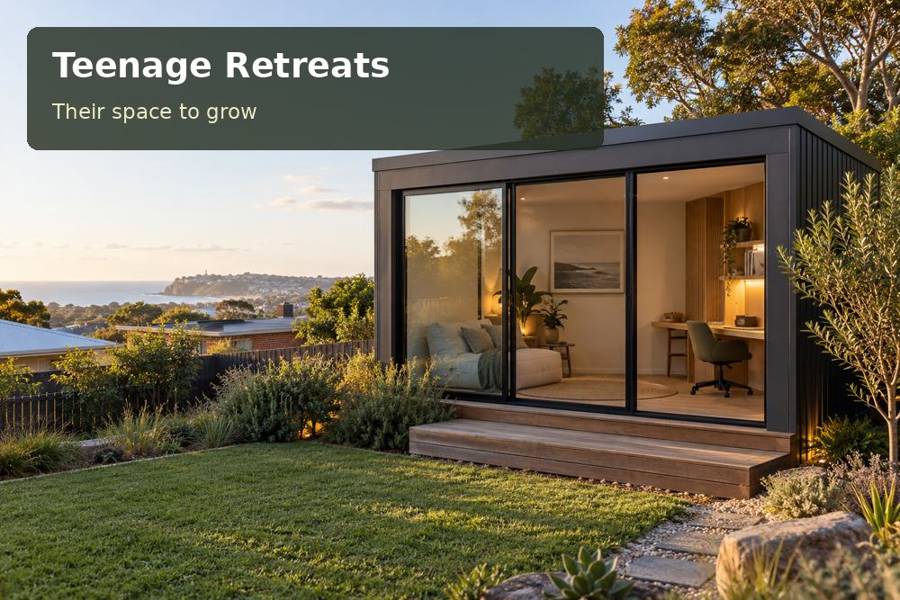
Plan a private teenage photo archive with controlled screen light, appropriate equipment storage and a clean transition from the garden.
A teenage retreat in Ballina can give coastal photographs and school media projects an organised home. The room can support sorting images, preparing folios and discussing drafts with a friend, while equipment and outdoor belongings have separate places. A disciplined arrangement at the entrance and desk can make a modest garden footprint feel polished and purposeful.
Separate arrival from image work
Start by identifying what comes home from an outing: a bag, footwear, a camera case and perhaps damp outer clothing. Decide what belongs in the house or an appropriate external store rather than placing everything beside electronics. A defined shoe area and cleanable threshold can help protect the main work surface from ordinary sand and grit. The door should remain easy to operate when someone pauses at the entrance.
A camera case needs storage selected with the equipment’s care instructions in mind. Ask the teenager to bring it to the joinery discussion so the compartment is properly sized. Leave room for chargers, accessories and school folders without making one deep cupboard the destination for every object. Any ventilation or room-condition requirements should be considered with the enclosure and services.
Make the local landscape a real creative reference
Ballina Shire Council describes the Richmond River estuary and catchment as valued for its ecosystems, biodiversity and varied community uses. That water landscape can provide a meaningful context for photography interests. A retreat can offer a place to catalogue observations after local outings, but should not promise wildlife encounters, river views or a particular exposure unless the property genuinely provides them.
The individual site needs appropriate hazard, level and ground checks. Review relevant flood and coastal information with a suitable adviser before deciding where the room sits. Responsible handling of roof runoff and surface water should be included in the scope. Avoid assuming that a raised floor, a familiar neighbourhood or a small footprint settles those issues.
| Archive activity | Detail to develop | Item to measure |
|---|---|---|
| Sorting photographs | Desk with controlled side light | Screen, keyboard and notebook arrangement |
| Storing camera equipment | Accessible compartments based on care guidance | Cases and charging accessories |
| Reviewing prints with a friend | Clear review surface and secondary seat | Folio sizes and chair movement |
Give editing useful light and accessible services
Place glazing where it offers daylight without direct reflections across the display. A fitted blind can give the user control, with its mechanism reachable after furniture is installed. Task illumination should serve handwritten notes and prints, while general lighting supports visitors and cleaning. Coordinate sockets and any data arrangement with the desk to avoid cable bundles trailing through the exit route.
External materials need a specification suited to the site’s assessed exposure, including compatible fixings and flashings. Maintain access to gutters and service equipment after landscaping. Measure the delivery route and agree unloading and working space before fabrication. Browse teenage retreats ideas and New South Wales context while defining private daytime creative use. Paid photography services, customer visits or sleeping accommodation are different proposals that require separate assessment if intended.
Small inclusions with practical value
- A removable protective surface for sorting mounted prints and school folios.
- A clearly designated shelf for current work, separate from long-term archive storage.
- Entry lighting directed onto the walking route rather than broadly into neighbouring gardens.
Prepare the archive-room proposal
- Assemble the camera bags, school folders and devices normally used together.
- Measure an editing and print-review arrangement with the second chair in place.
- Check site hazards, levels, services and exposure through appropriate advisers.
- Coordinate storage, glazing, electrical points and the enclosure’s conditioning requirements.
- Request a proposal describing construction, transport, drainage, approvals and maintenance.
Put the photographs at the centre of the brief
A Ballina archive retreat can give an emerging interest a confident private setting through practical organisation. Bring sample photographs, equipment measurements and site information to the design discussion. Ask for a concept that joins a clean arrival to controlled editing light, backed by a credible installation scope the family can review.
