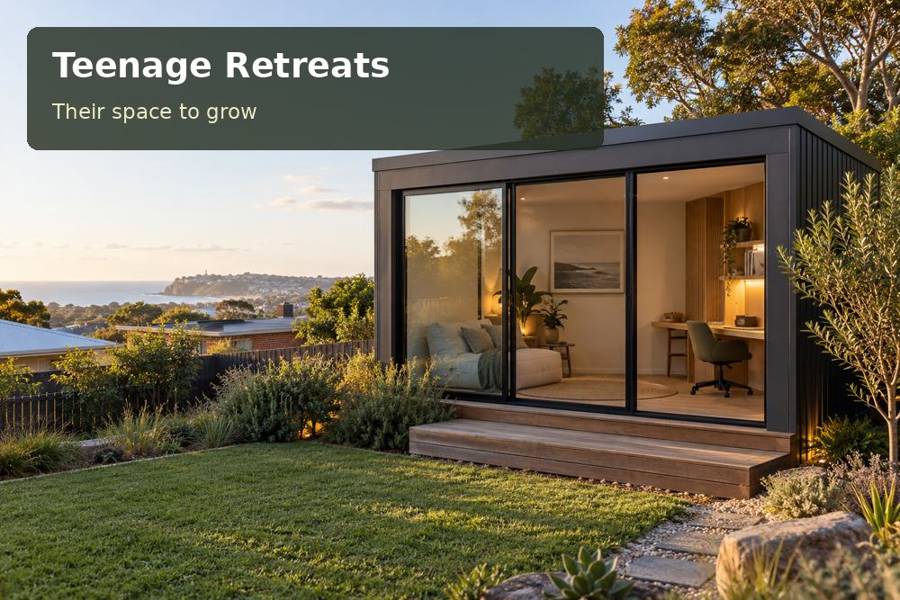
Plan a private teenage rehearsal space with useful viewing positions, organised notes and a carefully coordinated acoustic brief.
A teenage retreat in Bathurst can provide room to rehearse a speech, record a school presentation or prepare for a debate. These activities benefit from a layout that accommodates standing, sitting and reviewing work. A compact garden building can feel purposeful when the furniture, light and sound considerations follow the actual rehearsal process rather than a conventional bedroom arrangement.
Make room to stand and review
The teenager should be able to stand with notes and move naturally without facing a cupboard at arm’s length. Mark a presentation position, a small preparation desk and seating for one or two listeners. Check that the entry remains clear when chairs are in use. A wall used as a presentation backdrop should be selected before shelves or a large window occupy it.
If recording is intended, identify camera or device positions and the cables they require. Avoid promising professional production quality from a generic enclosure. Lighting should make written notes readable and provide a practical arrangement for the selected equipment. A carpenter can create a discreet equipment shelf and closed storage for folders, keeping the centre of the room available for rehearsal.
Borrow a civic garden sensibility
Bathurst Regional Council describes Macquarie River Bicentennial Park as beside the river at the lower end of William Street. Its range of garden and public-space features provides a local reference for an orderly outdoor approach. A retreat can similarly feel welcoming through a clearly defined path and modest landscaping, without assuming a riverside site or recreating a public park.
Inspect the proposed garden position for neighbouring windows and outdoor gathering areas. The direction of a speaker’s voice can affect the acoustic brief. Doors, glazing, roofing and ventilation all deserve consideration; decorative wall treatment alone is not a guarantee of sound isolation. The household should agree rehearsal hours and volume expectations alongside any construction measures.
Decisions for a rehearsal-led layout
| Rehearsal stage | Space to provide | Practical check |
|---|---|---|
| Preparing notes | Desk with paper and device space | Light falls usefully on the writing surface |
| Speaking aloud | Clear standing position | Furniture does not restrict movement |
| Reviewing recordings | Accessible equipment and seating | Leads stay outside the entry route |
Coordinate the shell before fitting the room
The enclosure’s insulation, openings and any heating or cooling should be assessed together. Position equipment where servicing remains possible and consider its noise where recording is important. Show switches and sockets on the same drawing as desks and shelves so one trade’s work does not undermine another’s. Blind operation should remain accessible when a presentation backdrop is arranged.
Site preparation requires measured levels, soil information and service identification. Foundations or piers should be designed for the actual building and ground, with a lawful roof-drainage route. Plan safe access if the floor is raised and verify the unloading route before choosing the construction method. Explore New South Wales context and teenage retreats concepts with private daytime use recorded. Paid coaching, client visits or sleeping accommodation needs separate advice if intended; the room’s ability to host a rehearsal does not settle its approval status.
Useful details for spoken work
- A dedicated cupboard for cue cards, school folders and recording accessories.
- A plain, intentional backdrop that can be altered without dismantling permanent joinery.
- A path light controlled from the room so visitors can leave along a readable route.
Develop the brief from a real presentation
- Rehearse an existing assignment and note the movement and equipment involved.
- Mark preparation, speaking and review positions to establish the usable footprint.
- Observe neighbouring sound relationships and agree the family’s use expectations.
- Seek site and approval advice while coordinating the acoustic, lighting and services brief.
- Ask for a proposal identifying enclosure details, trade responsibilities and installation access.
A place to prepare with purpose
A Bathurst rehearsal retreat can give a teenager an organised setting for presenting ideas. Bring a sample assignment, recording equipment and photographs of the proposed position to a design discussion. Request a plan that clearly shows preparation and speaking space, supported by a realistic acoustic scope and a credible construction method.
