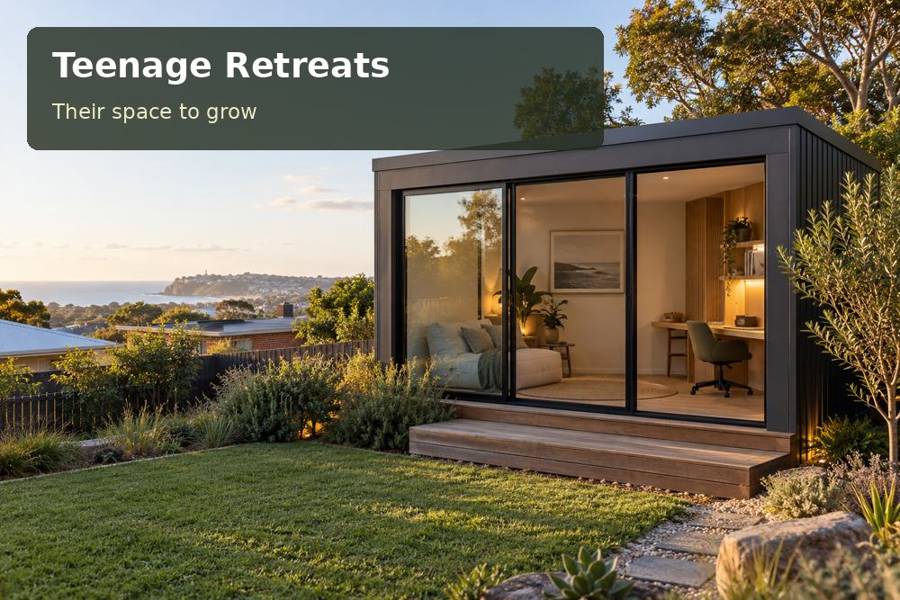
Develop a private songwriting retreat with instrument storage, useful recording positions and a whole-enclosure acoustic discussion.
A teenage retreat in Tamworth can give songwriting a purposeful place within the family property. A notebook, an instrument and a small recording setup may need far less space than a rehearsal studio, yet deserve a thoughtful arrangement. The best proposal explains the intended sound, equipment and working habits instead of promising that a garden room will automatically be soundproof.
Write the sound brief before the furniture brief
Describe whether the teenager will use an acoustic guitar, headphones, amplified instruments or only a voice and laptop. These activities place different demands on the enclosure and neighbour relationships. Ask the designer to consider sound pathways through doors, windows, roof and ventilation. A soft wall panel can affect the interior listening experience but is not evidence of complete isolation from surrounding homes.
Agree the family’s likely use hours and acceptable levels early. Recording equipment should be selected and arranged around the room’s real purpose; a simple setup for school compositions differs from professional production. Show where the user sits, where the instrument rests and how leads connect without crossing the entrance. If several musicians will gather, that visitor number belongs in the initial brief.
Give instruments and ideas different storage
Tamworth Regional Council records the first Country Music Festival in 1973 as part of the city’s history. That cultural connection offers an authentic backdrop for a teenager developing musical interests. The room can respond through good working details rather than themed décor. A suitable instrument position, an accessible notebook shelf and a clear place for a device give the activity more value than a collection of decorative music signs.
Follow instrument manufacturers’ storage advice, including conditions and support requirements. Do not assume that any garden cupboard provides the appropriate environment. A joiner can design compartments around cases and accessories, while the project team assesses insulation and heating or cooling needs. Keep service access clear and coordinate equipment noise with any recording priorities.
| Songwriting activity | Space or detail to explore | Point requiring confirmation |
|---|---|---|
| Working with lyrics | Desk surface beside the instrument position | Notes remain readable without moving equipment |
| Making a draft recording | Defined device and microphone positions | Cables stay clear of circulation |
| Putting instruments away | Storage based on product instructions | Case dimensions and suitable room conditions |
Make light and construction support the work
A garden window can provide an appealing outlook while leaving a useful wall for instruments and storage. Review direct sun and privacy, and keep blind controls accessible. Task lighting should suit handwritten lyrics as well as screens; general illumination can serve visitors and cleaning. Qualified electrical work needs to be coordinated with the acoustic and joinery arrangements before wall linings close.
The site requires appropriate investigation of ground, levels, services and water movement. Foundations must suit the assessed conditions and loads, and roof runoff needs a lawful discharge route. Verify the delivery method against actual gate widths and handling space. Compare teenage retreats possibilities with New South Wales context while recording private daytime use. Paid lessons, visiting clients or sleeping accommodation changes the proposal and needs separate assessment if intended, with approval advice obtained before manufacture.
Keep the useful details in focus
- Provide an accessible place for spare strings, cables and small accessories rather than one deep miscellaneous drawer.
- Select a music stand position that does not obstruct the exit when unfolded.
- Retain a clear seating arrangement for a friend listening to a draft composition.
Scope the room around one real session
- Record a typical songwriting session and list the equipment used.
- Agree likely sound levels, visitors and use hours with the household.
- Test instrument, desk and storage positions with full-size measurements.
- Seek site and approval advice while coordinating acoustic, electrical and enclosure requirements.
- Request a proposal that states assessed features, remaining questions and installation responsibilities.
A practical home for new compositions
A Tamworth songwriting retreat can be distinctive because its details serve the music. Bring instrument cases, equipment dimensions and a clear sound brief to the consultation. Ask for a plan that explains the working arrangement and the entire enclosure, giving the family a credible proposal for an inviting private room.
