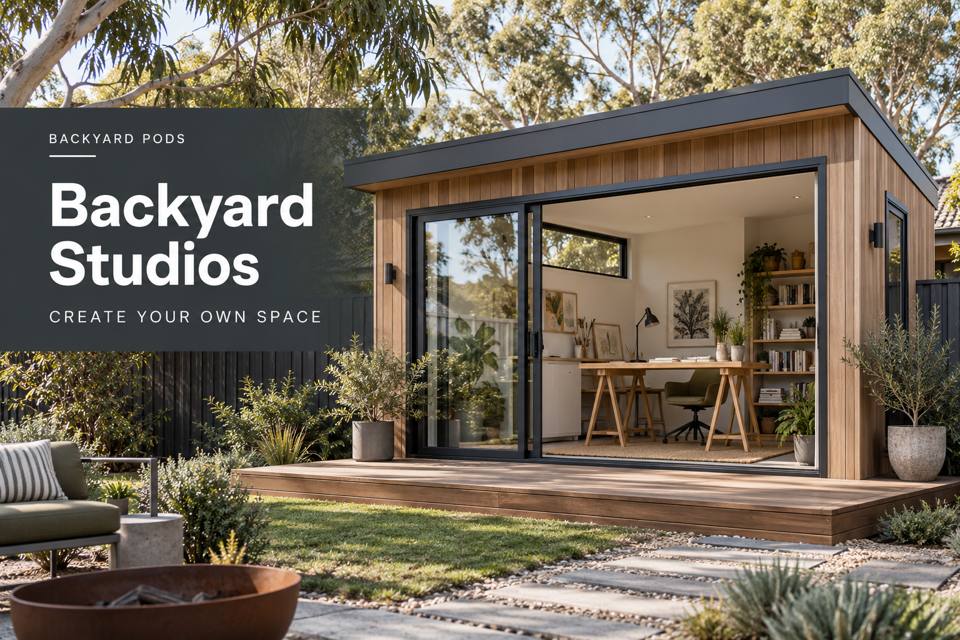
A stop-motion studio gives miniature scenes a stable home between frames.
Explore Backyard Studios in Victor Harbor with this specific use in mind.
A stop-motion studio gives miniature scenes a stable home between frames. In Victor Harbor, the strongest brief starts with the size of the set, the camera movement and the time a scene must remain untouched. A separate making room can protect this continuity while giving fabrication and playback their own places.
Keep the scene stable between sessions
Build the planning exercise around one complete animation setup. Mark tripod legs, lighting stands and the animator's position on a temporary floor plan. Allow the camera to move through the intended shot without entering the doorway route. A set that remains assembled needs a different storage strategy from a folding photography backdrop; identify which parts must never be shifted during production.
Separate fabrication from the shooting table
Small props still create offcuts, packaging and unfinished paintwork. Give preparation a surface away from the recorded scene, and name the materials before selecting finishes or ventilation arrangements. Keep clean lenses and electronic equipment out of active making tasks. A removable tray for each scene can simplify organisation, but test its weight and handling with the actual miniature objects.
Control light as part of the sequence
Changing daylight can alter a long frame sequence. Discuss adjustable window shading, practical task lighting and the selected production lights as separate needs. Record the intended shooting hours rather than asking for an unexplained dark room. Equipment specifications should guide electrical provision; lighting stands and cables also require space that a simple desk symbol will not show.
Review without dismantling the work
Place playback where the animator can inspect a sequence without moving the camera. Label scene versions and keep reference notes beside the review station. Ask the carpenter to show access to wall-mounted storage once the set is occupied. The fit-out should support an orderly return to production, with settings and small components easy to find at the next session.
◈ Assess the garden connection
The garden approach should be checked with the route for scene trays between the house and studio in mind. Mark existing levels at the proposed door, building footprint and connecting path, then ask the project team to assess support and drainage together. Retaining a usable route may influence the floor level more than a preferred facade drawing. Existing trees, planting and household pets also need a clear construction boundary. Do not assume a coastal postcode identifies soil, exposure or a suitable foundation; request property-specific information before committing to ground preparation.
Coordinate fabrication, services and handover
Coordinate fabrication and transport around the largest shooting table and tall lighting stands. Ask the provider whether the project arrives as panels, components or an assembled unit; each approach creates different access and staging needs. Confirm measurements and unloading arrangements before booking work. The service discussion must include camera power, production lighting and the playback monitor, with responsibilities assigned to the relevant trades. Review an accessible tripod layout beside removable prop trays on the furnished drawing. At handover, retain product references, care guidance and any assessed installation documents so later maintenance is based on the supplied project.
▦ Compare the project decisions
| Priority | Brief information | Practical review |
|---|---|---|
| Scene continuity | Largest assembled set and camera travel | Walk through a complete shot |
| Preparation | Prop materials and removable trays | Separate active making from lenses |
| Playback | Monitor position and reference records | Check review with the set intact |
Keep these priorities visible
- Scene continuity: Largest assembled set and camera travel. Walk through a complete shot.
- Preparation: Prop materials and removable trays. Separate active making from lenses.
- Playback: Monitor position and reference records. Check review with the set intact.
✓ Prepare the enquiry step by step
- Measure the assembled scene, tripod and lighting stands together.
- Mark an entrance route that avoids the production equipment.
- Record materials used to prepare and finish miniature props.
- Agree shading and electrical provision against the shooting equipment.
- Review a furnished drawing before confirming the studio fit-out.
Related local project guides
For the complementary workshops decisions in Victor Harbor, compare Victor Harbor Workshops for Drilling Templates with Separate Marking and Assembly.
For a different backyard studios use in Victor Harbor, review Victor Harbor Backyard Studios for Textile Cutting with Full-Length Fabric Handling.
Summary and next step
A purposeful animation studio protects continuity from setup to playback. Reserve the scene footprint, separate prop preparation and coordinate light around real equipment. These details make a compact room a reliable place to develop patient, visually precise work. Bring the completed checklist to your Victor Harbor backyard studios enquiry, with the property measurements and equipment list. Compare the backyard studios range and the South Australia pages against that brief.
Regional references
For local landscape context, consult the council regional information. The Victor Harbor regional climate record offers background for seasonal planning; it does not establish the proposed property's exposure or construction requirements.
