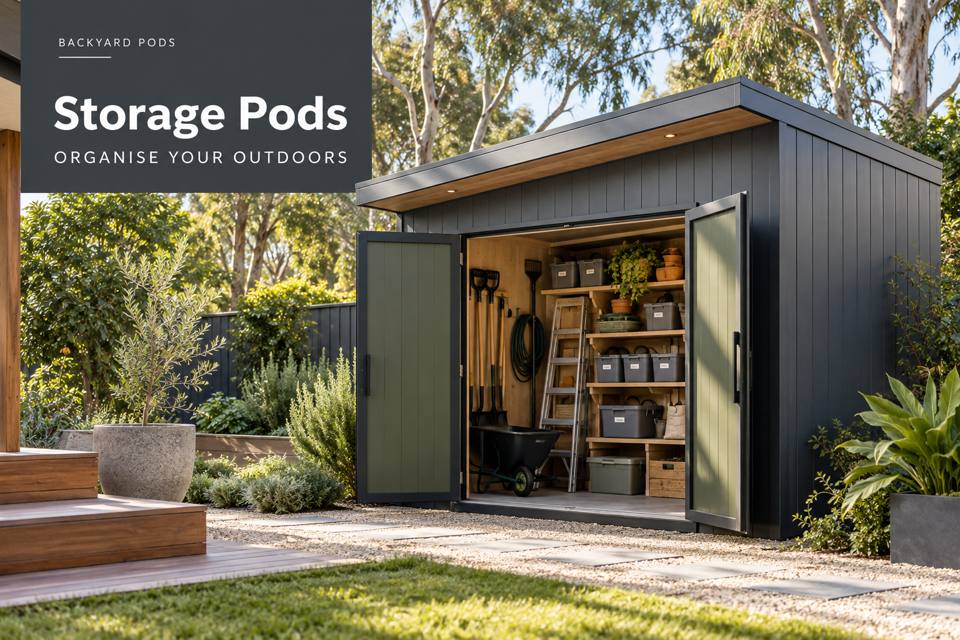
Plan bicycle storage in Victor Harbor around full equipment dimensions, used-gear handling, accessory organisation and a clear route back to the garden.
◈ Store the ride as a complete set
A bicycle rarely travels alone. Helmets, pumps, bags, footwear and small replacement parts belong to the same routine. Compare storage pods in Victor Harbor storage options using the complete equipment set and the way each rider arrives home. The goal is straightforward retrieval and return, with enough room to inspect belongings instead of packing every item tightly against the next.
Measure bicycles with their actual accessories fitted. Handlebar width, baskets and child seats can change storage needs considerably. A rack chosen from the frame size alone may disappoint once the full equipment arrives.
Make the doorway and turning space work together
Trace movement from the garden approach through the opening to the proposed rack. A wide internal wall is of limited use if the bicycle cannot turn into its position easily. Test the movement with a scaled drawing or a measured trial space, including the person handling the bicycle.
Consider which riders use the equipment. Frequent lifting may be unsuitable for the intended user, while a floor-level arrangement may need a larger footprint. Explain these handling preferences before choosing wall mounts. Provide expected loads and fixing needs to the responsible designer or installer.
Organise the return before the next departure
Used outdoor equipment should be inspected and cared for according to its supplier instructions before being put away. Allocate a temporary holding position for items needing attention, separate from ready-to-use accessories. Do not place damp clothing across unrelated stock simply because no drying routine was discussed.
Small labelled containers can make pumps, tools and replacement items easier to find. Keep compatibility information with spare components and distinguish household storage from a repair workshop. If maintenance activities or powered equipment are proposed, assess their additional space and service requirements rather than treating them as an automatic inclusion.
▦ Compare bicycle storage arrangements
| Decision | Evidence needed | Practical test |
|---|---|---|
| Rack type | Bicycle dimensions and user preferences | Can the intended rider handle it? |
| Fixings | Equipment mass and mounting detail | Is support properly specified? |
| Entry | Openings and turning movement | Does the full bicycle pass through? |
| Accessories | Complete riding inventory | Can a ride set be collected easily? |
Keep the building maintainable
The route around the pod also matters. Retain access to cladding, roof drainage and exterior service points, and consider how nearby planting will grow. Ground levels and surface water require address-specific assessment; storage placement should not rely on assumptions about a whole town's terrain.
Security choices should be discussed honestly. Decide how the building and equipment will be secured, then obtain relevant product information and any advice needed for your circumstances. Avoid assuming that a particular door or rack guarantees protection. The quotation should identify the supplied fittings and who installs them.
Inventory priorities
- Include helmets, fitted accessories and occasional riding equipment in measurements.
- Label compatible spare parts rather than keeping unidentified duplicates.
- Separate ready equipment from items awaiting cleaning or inspection.
- Preserve a clear removal route after shelving and containers are filled.
✓ Build the storage brief
- Photograph and measure every bicycle in its normal fitted condition.
- Record how each user prefers to handle and retrieve their equipment.
- Test the doorway, turning area and proposed rack positions together.
- Allocate return-care and accessory storage, with installation responsibilities identified.
- Review the final layout using a complete departure and return sequence.
Related storage guides
Consult Gladstone Storage Pods with a Delivery-to-Shelf Organisation Plan and A Storage Pod that Makes Outdoor Equipment Easy to Retrieve in Rockingham for other approaches to organised storage. The broader storage pods collection can support a footprint comparison, while the property conditions in South Australia still need appropriate local investigation.
Summary
Useful bicycle storage supports the whole outing. Plan around fitted equipment, realistic handling and a clear return routine. A measured entry and labelled accessories help make the pod an organised part of daily recreation, rather than a room that simply contains bicycles.
