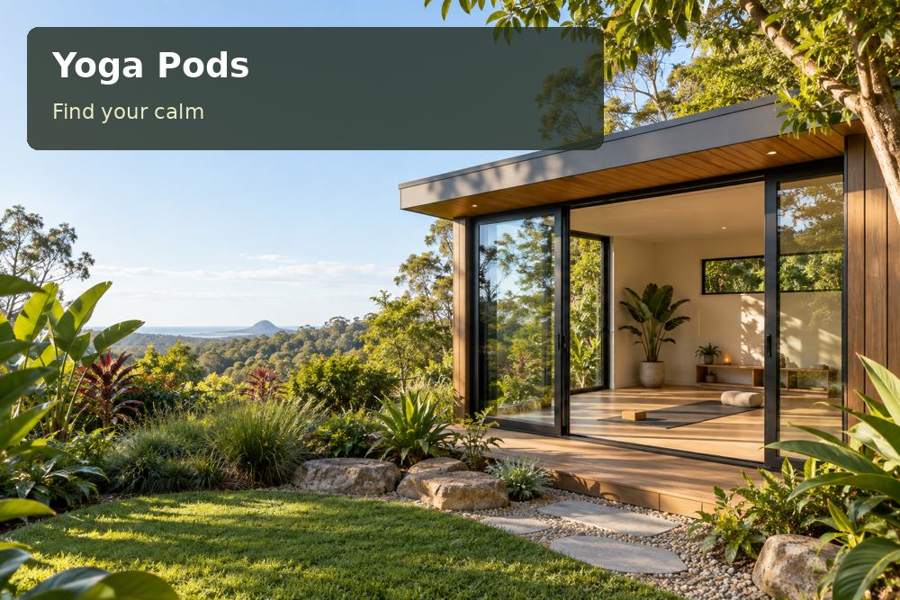
A private yoga room can create a consistent place for movement, breathing and quiet reflection. In Noosa Heads, the garden setting can be part of that experience without replacing the practical details needed for regular use.
A private yoga room can create a consistent place for movement, breathing and quiet reflection. In Noosa Heads, the garden setting can be part of that experience without replacing the practical details needed for regular use. Discover yoga pods in Noosa Heads, then describe how you practise, when the room will be occupied and whether it is solely for household use. A calm atmosphere begins with a clear, realistic brief.
Define the practice before the aesthetic
A single person practising gently needs a different layout from two people moving through standing sequences. Measure the usable floor area with mats in place and arms extended. Allow clear movement around the practice zone and space for props to remain organised. A room can look spacious in an empty photograph while feeling constrained once storage and furniture are installed.
The Sunshine Coast combines beaches, national parks and hinterland landscapes. A Noosa garden may offer trees, birds and a strong sense of outdoor connection. Frame that outlook selectively rather than making every wall transparent. Privacy and controlled daylight can support concentration more effectively than unrestricted glass.
Create comfort without complicated routines
Warm, humid periods make airflow and shading relevant. Consider whether your usual practice takes place in the morning, afternoon or evening. The design should respond to those hours. Openings, screens, fans and any cooling system need to work together so the user can choose comfortable conditions without an elaborate sequence of adjustments.
| Practice need | Design response to explore | Question to ask |
|---|---|---|
| Clear movement | Uncluttered usable floor | What remains after walls and storage are allowed for? |
| Gentle daylight | Controlled glazing and shading | Does the light suit normal practice hours? |
| Quiet attention | Suitable separation and acoustics | Which sounds are likely to reach the room? |
| Organised props | Accessible compact storage | Can items be reached without interrupting the session? |
Choose a floor finish suited to the intended activity, cleaning and user needs. Discuss it with the supplier rather than assuming a decorative surface will perform well for every practice. Keep thresholds and door areas clear, particularly when moving barefoot between indoors and outdoors.
Preserve the living character of the garden
Trees and vegetation may make the room appealing, but root protection and maintenance access require informed choices. Avoid disturbing habitat simply to widen the view. Reflected foliage and transparent through-views in glazing can create issues for birds, so consider suitable visible treatments where needed.
Exterior lighting can guide arrival without brightening the whole garden. A modest path and a legible entrance often provide a more restful experience than decorative lights scattered through planting. Roof water and ground drainage should be resolved so the route does not become slippery or ponded after rain.
Keep private and business use distinct
If the room will host paid classes, consultations or visitors beyond the household, state that intention early. Occupancy, business use, parking, access and other requirements need current property-specific advice. A private garden yoga room should not be treated as automatically suitable for public classes. No health outcome is promised by the building itself.
Installation access can also shape the proposal. Photograph the street approach, driveway, gates and tree canopy. Ask how the structure and materials will reach the site and which garden areas may be affected. A complete quote should identify foundations, services, paths and reinstatement.
- Describe practice style, user numbers and usual session times.
- List props, storage and any audio equipment.
- Specify household-only or intended business use.
- Photograph the outlook, access route and ground levels.
- Ask for shading, ventilation and floor specification in writing.
Develop a room for consistent practice
- Test the movement space with mats and props at full size.
- Compare garden positions for light, privacy and practical access.
- Obtain site and approval advice for the exact intended use.
- Review comfort, floor finish and drainage together.
- Keep the completed layout simple and test a full practice session.
Make calm space part of daily life
Review yoga pods in Queensland and yoga pods across Australia before requesting a proposal. Share your Noosa Heads location and practice brief. A thoughtfully designed yoga pod can provide a dedicated setting through useful movement space, controlled light and a considered relationship with the garden.
Nearby towns and suburbs
Local information
Regional context does not replace assessment of the individual property. Sources checked on 29 September 2026.
Back to articles and guides