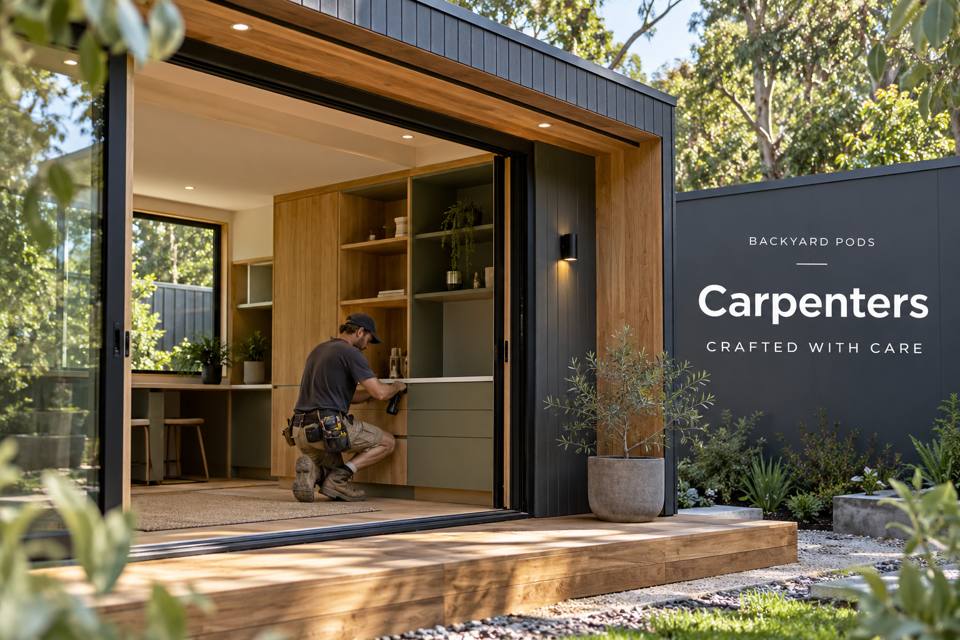
Build a Port Elliot carpenter brief for pod cladding corners, finish samples, repair access and correctly coordinated installation responsibilities.
◈ Repairable Pod Cladding Corners and Serviceable Fixings
Exterior workmanship becomes especially visible at corners, openings and the edges where materials meet. A pod can have an attractive cladding specification yet still need careful detailing to make those junctions consistent and maintainable. A carpenter’s brief should identify the complete assembly, the intended finish and the access needed for future work. Ask for drawings and samples that explain the detail, rather than judging the result from a distant photograph. Discuss the exterior assembly with carpenters in Port Elliot before selecting a corner trim or finish.
The historic streets of Port Elliot provide a useful reminder that material character comes from proportion and careful junctions. Refer to the particular building and setting when discussing appearance; do not assume that a new pod should copy an older facade literally.
Agree the corner assembly before cutting material
Identify the substrate, cladding orientation, edge treatment and nominated fixings with the responsible designer and suppliers. Different products can have different requirements for movement, clearances and installation. A trim that looks suitable may not complete the weather detail. Request a marked corner section that connects the appearance to the specified assembly, and make any unresolved component visible before the carpenter is asked for a final price.
Use a sample to assess finish and alignment
A small mock-up can reveal how boards, panels or trims meet at an opening. Inspect the intended joint rhythm, exposed edges and coating transitions. View the sample under different light rather than relying on a digital colour swatch. Clarify which surfaces are factory finished and which need work on site, including how cut edges are treated according to the selected product instructions.
Keep future repairs realistic
Ask which sections can be removed, how matching materials can be obtained and what records should be retained. Repairability is particularly important where a service route sits behind a decorative panel. Do not hide a control or junction simply to produce a clean photograph. The carpenter and services providers should agree how inspection access is maintained without repeatedly damaging the surrounding finish.
Coordinate the site and handover sequence
Check whether cladding work occurs before transport, after placement or in both stages. Protect completed surfaces during delivery and allocate responsibility for installation damage in the project scope. The coastal location warrants a discussion of product suitability and care, supported by supplier information rather than a blanket durability promise. Keep finish names, batches and component details in the owner’s records for later maintenance.
▦ Compare the practical decisions
| Decision | Information to provide | Review action |
|---|---|---|
| Corner section | Substrate, edge and fixing information | Confirm the complete assembly |
| Finish sample | Colour and treatment of cut surfaces | Inspect the real material |
| Repair record | Product references and removable sections | Preserve future access |
Details to keep in the brief
- Request a section showing the complete cladding corner.
- Confirm how cut edges and junctions receive their specified treatment.
- Keep removable service panels identifiable after finishing.
✓ Prepare the project step by step
- Collect the assembly information for the proposed exterior products.
- Review a corner or opening mock-up with the carpenter.
- Resolve factory and on-site finishing responsibilities.
- Plan transport protection and the sequence after placement.
- Retain material references and repair instructions at handover.
Related local project guides
The nearby workshop article helps explain timber trial and assembly planning: Victor Harbor Workshops for Timber Joinery Trials and Repeatable Assembly Checks.
A different interior craft process offers another perspective on clean material handling: Victor Harbor Backyard Studios for Ceramic Handbuilding and Careful Material Handling.
Discuss a measured proposal
Request a carpenter proposal with a corner detail and a physical finish sample. Those two items make it easier to compare workmanship, product treatment and future access with the same expectations. Compare the carpenters collection, and review the South Australia options against your property brief.
Summary
Well-detailed cladding creates value through consistency and serviceability. Resolve the corners, assess a real sample and plan repair access before finishing. A documented carpenter brief helps an exterior remain understandable to the next person who maintains it, as well as attractive on installation day.
Local source
Alexandrina Council — Port Elliot
