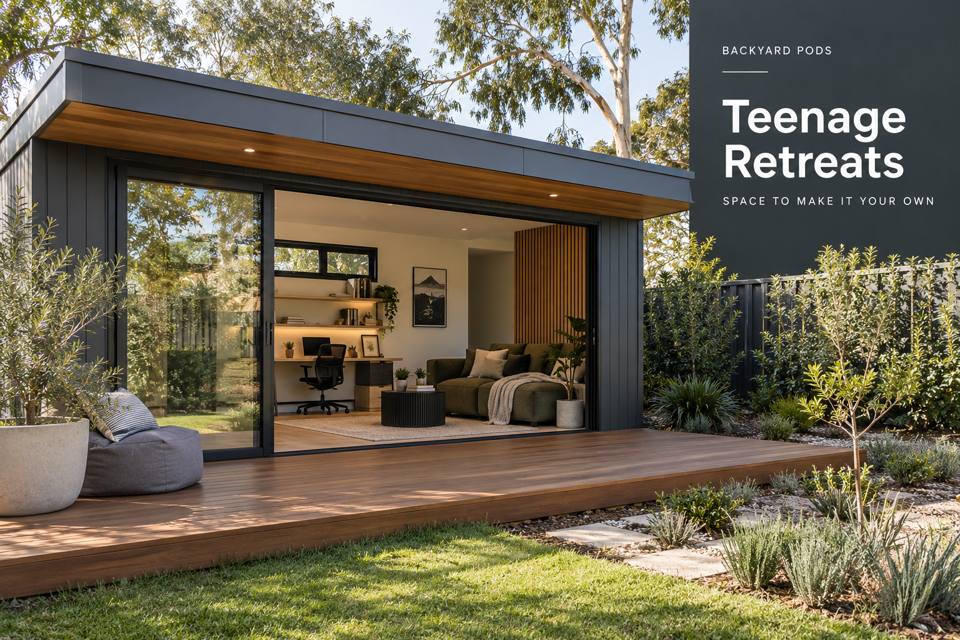
A group-study retreat in Victor Harbor should be planned with the young people who use it and the household responsible for it.
Explore Teenage Retreats in Victor Harbor with this specific use in mind.
A group-study retreat in Victor Harbor should be planned with the young people who use it and the household responsible for it. Define the normal group, activities and hours before choosing furniture. Shared notes, individual belongings and the connection to the home need clear places so the room remains useful during an occupied study session.
Size the table for the real group
Set out notebooks, devices and shared reference material with every normal seat occupied. Include the space needed to stand up and pass behind chairs. A table large enough for several laptops may leave little room for collaborative paper work. Keep the agreed group size credible rather than describing spare floor area as unlimited capacity for extra friends.
Separate bags from shared work
Measure the bags and personal items brought to a normal session. Give each user a clear storage position outside the table footprint. The entrance route should remain usable when bags are returned. Ask the fit-out provider to show open storage with chairs occupied, avoiding an arrangement where one person must leave their seat whenever someone retrieves a book.
Make shared information readable
Decide how the group uses notes, drawings or a display. Test visibility from each seat and the standing explanation position. Relevant trades should coordinate nominated devices and lighting. A display wall needs mounting and access details appropriate to the products, while household procedures should address what material is stored or visible to visitors.
Agree the session reset together
Include the users in defining how notes, devices and furniture return after study. Keep individual work separate from communal supplies. Discuss sound, hours and the connection to the home as part of the household brief, seeking relevant advice where performance requirements apply. Rehearse the full session and reset so the room supports a practical shared routine rather than an adult's untested furniture plan.
◈ Assess the garden connection
The garden approach should be checked with students carrying bags from the home to individual storage in mind. Mark existing levels at the proposed door, building footprint and connecting path, then ask the project team to assess support and drainage together. Retaining a usable route may influence the floor level more than a preferred facade drawing. Existing trees, planting and household pets also need a clear construction boundary. Do not assume a coastal postcode identifies soil, exposure or a suitable foundation; request property-specific information before committing to ground preparation.
Coordinate fabrication, services and handover
Coordinate fabrication and transport around the shared study table and measured bag-storage fittings. Ask the provider whether the project arrives as panels, components or an assembled unit; each approach creates different access and staging needs. Confirm measurements and unloading arrangements before booking work. The service discussion must include study lights, nominated displays and assessed device connections, with responsibilities assigned to the relevant trades. Review the normal study group seated beside open individual storage and readable shared notes on the furnished drawing. At handover, retain product references, care guidance and any assessed installation documents so later maintenance is based on the supplied project.
▦ Compare the project decisions
| Priority | Brief information | Practical review |
|---|---|---|
| Study group | Occupied seats and shared paper formats | Mock up a normal session |
| Personal bags | Actual bag sizes and retrieval positions | Keep the table and entrance clear |
| Shared notes | Display method and viewing positions | Test every participant's view |
Keep these priorities visible
- Study group: Occupied seats and shared paper formats. Mock up a normal session.
- Personal bags: Actual bag sizes and retrieval positions. Keep the table and entrance clear.
- Shared notes: Display method and viewing positions. Test every participant's view.
✓ Prepare the enquiry step by step
- Agree the normal group and study activities with the users.
- Measure devices and shared materials with all seats occupied.
- Provide individual bag storage outside the working surface.
- Coordinate displays, services and household use expectations.
- Trial the complete session-to-reset routine together.
Related local project guides
For the complementary office pods decisions in Victor Harbor, compare Victor Harbor Office Pods for Confidential Document Review and Controlled Visitor Access.
For a different teenage retreats use in Victor Harbor, review Victor Harbor Teenage Retreats with Shared Device Storage and Clear Study Transitions.
Summary and next step
A useful group-study retreat respects shared work and individual belongings. Measure the occupied table, keep bags separate and make notes visible to everyone. A user-led reset and clear household brief help the room support collaboration without becoming an obstructed collection of desks and devices. Bring the completed checklist to your Victor Harbor teenage retreats enquiry, with the property measurements and equipment list. Compare the teenage retreats range and the South Australia pages against that brief.
Regional references
For local landscape context, consult the council regional information. The Victor Harbor regional climate record offers background for seasonal planning; it does not establish the proposed property's exposure or construction requirements.
