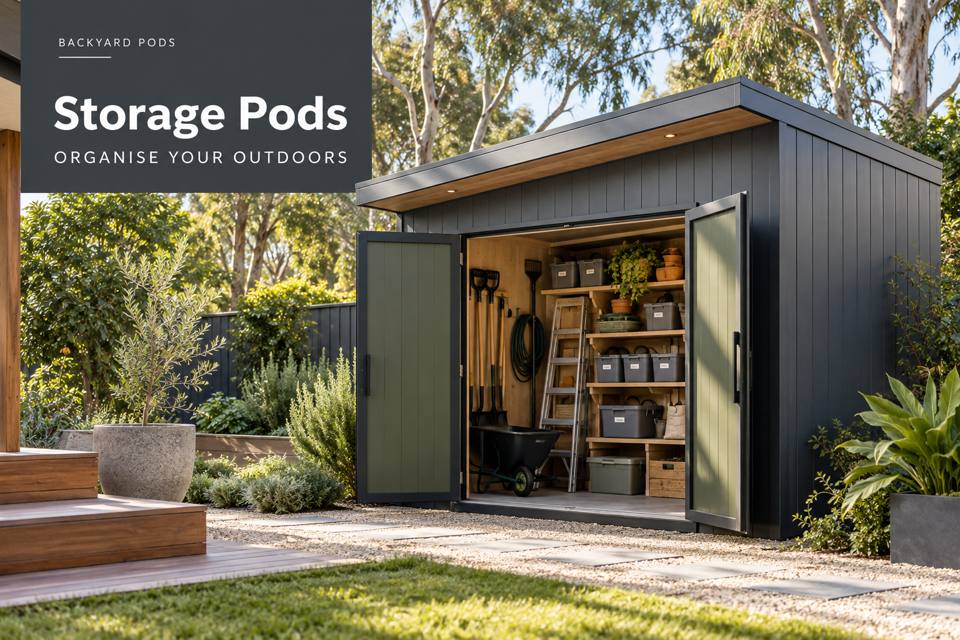
Organise a Victor Harbor storage pod around garden equipment readiness, measured retrieval, a defined inspection bench and suitable shelf information.
◈ Garden Equipment with a Clean Inspection Bench
Garden equipment is easier to maintain when it can be identified, retrieved and inspected without emptying the whole shed. A storage pod should organise these movements rather than simply collect everything under one roof. Begin with the equipment inventory, including the largest item and its carrying or rolling route. A modest inspection bench can help keep damaged or incomplete items separate from equipment ready for the next task. Compare storage pods in Victor Harbor against equipment dimensions, retrieval movements and the planned inspection task.
A garden on a Victor Harbor property may contain planted edges, changing levels and different access surfaces. Record the actual route to the proposed pod and ask the project team to assess it; the coastal setting does not define the support or drainage solution.
Classify equipment by readiness and use
Separate regularly used tools, seasonal items and equipment awaiting attention. Labels should identify destinations without relying on memory. Measure long handles, containers and bulky attachments before selecting shelves. Keep product handling and storage guidance available, especially where contents have requirements beyond ordinary household objects. Do not assume that every material can share the same cupboard simply because it fits.
Make inspection a limited and defined activity
Describe what occurs on the bench: checking completeness, reading instructions or identifying a damaged part. More involved repair processes may need a different workshop brief and appropriate advice. Provide a clear surface, task light and a destination for items awaiting professional attention. This prevents an inspection area from quietly becoming an unsuitable place for activities that the building and services were not designed to support.
Design shelves around retrieval movements
Test removing the most awkward item with neighbouring shelves occupied. A deep shelf can provide volume while making identification and reach less convenient. Ask for load information and appropriate fixing advice for the proposed assembly. Keep the heaviest or most cumbersome items in positions assessed for their handling, rather than arranging storage solely to produce a neat elevation drawing.
Protect the access needed for the building itself
Draw the entrance, door swing and final equipment layout together. An item stored just inside the door can obstruct access even when the room’s total capacity seems adequate. Coordinate external falls, supports and the approach with relevant providers. Leave inspection and service points available, and agree how the owner can clean the entrance and surrounding edge without first relocating a full collection.
▦ Compare the practical decisions
| Decision | Information to provide | Review action |
|---|---|---|
| Ready equipment | Identifiable destination and retrieval route | Test a normal garden task |
| Inspection bench | Defined checks and clear working surface | Keep repair scope explicit |
| Shelving | Item dimensions and relevant load information | Review with the supplier |
Details to keep in the brief
- Keep ready equipment distinct from items awaiting assessment.
- Measure long handles and bulky attachments before shelving is ordered.
- Specify the limited tasks expected at the inspection bench.
✓ Prepare the project step by step
- Create an equipment inventory with dimensions and use frequency.
- Sort ready, seasonal and damaged items into identifiable groups.
- Test the retrieval movement of the largest stored object.
- Review shelf loading, fixings and bench lighting with providers.
- Check doorway access and building inspection points before filling the room.
Related local project guides
The nearby carpenter brief explains how exposed components can remain serviceable: Port Elliot Carpenters for Repairable Pod Cladding Corners and Serviceable Fixings.
The existing local storage article adds a specific bicycle retrieval routine: Victor Harbor Storage Pods for Bicycles with a Complete Return-to-Ride Routine.
Discuss a measured proposal
Send an equipment inventory with your storage-pod enquiry. Retrieval dimensions and a clearly limited inspection task help the team compare shelves, benches and doorway arrangements meaningfully. Compare the storage pods collection, and review the South Australia options against your property brief.
Summary
A disciplined storage layout makes garden work easier to begin and equipment problems easier to notice. Sort by readiness, measure retrieval and keep the inspection task clear. The resulting pod offers useful organisation while preserving access to the building and its services.
Local source
South Australian Tourism Commission — Victor Harbor
